1973 Nobel Prize in Physiology or Medicine
Reason for Award
for their discoveries concerning organization and elicitation of individual and social behaviour patterns
Laureates
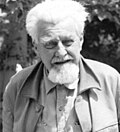
 Austria
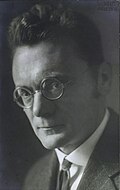
 Germany
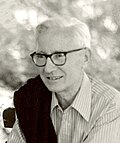
 United Kingdom of Great Britain and Northern Ireland
Explanation
Konrad Lorenz, Karl von Frisch and Nikolaas Tinbergen studied how animals decide what to do. They found, for example, that baby ducks follow the first moving thing they see, a process called "imprinting," and that honey-bees use a dance to tell their friends where flowers are. Animals mix rules they are born with (instincts) and things they learn later. The trio’s work became the basic guidebook for comparing the behaviour of people and animals. Today it helps us train pets kindly and protect wild animals.
Related Keywords
ethology
A biological discipline that objectively observes and experiments on animals’ natural behaviour, systematised by the three laureates. Unlike laboratory conditioning studies, it analyses species-specific acts within their ecological context. It forms the basis for exploring behavioural evolution, adaptive value and neural substrates, leading to modern behavioural ecology and neuroethology. The field offers cross-disciplinary insights applicable to human development and animal welfare. Its hallmark is addressing behaviour through Tinbergen’s four-question framework.
imprinting
A form of learning occurring during a restricted sensitive period, leading to long-lasting recognition of a target. Demonstrated by Lorenz when goslings followed the first moving object they saw. It occupies the boundary between instinct and learning, illustrating interactions between neural plasticity and genetic programming. Imprinting influences parent–offspring recognition, mate choice and species-specific social acts. It informs studies of behavioural development and practical breeding or husbandry methods.
waggle dance
An 8-shaped dance performed by honey-bees inside the hive; the waggle run’s angle encodes the food source’s bearing relative to the sun, and its duration encodes distance. Deciphered by von Frisch through combined field marking and hive observation. The dance integrates sound and olfactory cues, forming a multimodal communication system. Considered one of the most sophisticated symbolic transmissions known in non-human animals, it serves as a comparative model for language evolution studies. Research now includes robotic dance mimics and neural-circuit mapping of bee navigation.
fixed action pattern
A stereotyped sequence of behaviour that, once triggered by a specific stimulus, runs to completion. Lorenz illustrated it with egg-rolling in geese. Although species-typical, its initiation threshold and rhythms vary with internal motivational states. Neurobiologically, midbrain or spinal-level firing patterns are implicated. The FAP concept has influenced robotic subsumption architectures and behavioural decision models. It is applied in comparative analyses of predation, courtship, defence and other behaviours.
Tinbergen's four questions
A framework explaining behaviour through four perspectives: 1 mechanism (causation), 2 ontogeny (development), 3 function (adaptive value) and 4 phylogeny (evolution). Tinbergen illustrated it with predator-avoidance in herring gulls. The multi-layered approach integrates physiology, genetics and ecology, avoiding single-factor reductionism. Modern cognitive science and medical physiology cite it as a model for comprehensive understanding of pathology. It is also used pedagogically to train scientific reasoning.
sign stimulus
An external cue that triggers a fixed action pattern; exaggerated versions (supernormal stimuli) can elicit stronger responses. Tinbergen used red-rimmed model eggs to provoke egg-retrieval in gulls. The concept guides experiments on visual, olfactory and mechanosensory selectivity, clarifying sensory filters. It informs studies of neural input layers underlying behaviour and pattern-recognition algorithms in AI. It is a key term in discussions of predator mimicry and the evolution of warning colours.
social behaviour
A set of interactions among conspecifics involving exchange of information or resources, including cooperation and competition. The laureates’ work provided empirical support for the evolutionary principles and communication mechanisms underlying sociality. Social behaviour covers parent–offspring relations, flocking, aggression and dominance, all tightly linked to fitness. Their findings spurred primate and avian studies, underpinning the social-brain hypothesis and models of altruism. Insights transfer to human behavioural science and economics.
animal communication
Behavioural acts that transmit and receive information through visual, auditory, chemical and tactile channels. The honey-bee waggle dance is a prime example demonstrating complexity and precision. The field inspired theory on signal honesty, cost and evolutionary stability. Applications include pest control using acoustic or pheromonal signals and biodiversity monitoring. Advances in sensing technology and AI continue to uncover novel communication forms.