2021 Nobel Prize in Physiology or Medicine
Reason for Award
for the discovery of receptors for temperature and touch
Laureates
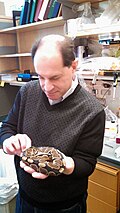
 United States of America

United States of America
Explanation
Inside our skin are tiny “switches” that let us feel hot, cold and touch. David Julius and Ardem Patapoutian were the first to discover what these switches look like. They found out why the spicy chemical in chili peppers, capsaicin, feels hot and how a gentle touch can feel pleasant. Their work shows how our bodies quickly warn us about danger, like avoiding a burn. The discovery is also expected to help scientists make better pain-relief medicines.
Related Keywords
TRPV1
TRPV1 stands for Transient Receptor Potential Vanilloid 1 and is a cation channel that opens to noxious heat above ~43 °C, capsaicin and acidic pH. It is expressed mainly in unmyelinated C-fibers and some Aδ fibers, where Ca2+ influx initiates pain signaling. Phosphorylation by inflammatory cytokines lowers its activation threshold, producing heat hyperalgesia. Cryo-EM has visualized its dual-gate architecture and ligand pocket, providing a template for rational inhibitor design. TRPV1 antagonists are in clinical trials for chronic and post-operative pain.
TRPM8
TRPM8 is the cold receptor channel responsible for the cooling sensation of menthol, activating at skin temperatures below ~28 °C. It resides in Aδ and C cold-sensing neurons and conveys coolness and cold pain. Compounds like menthol or eucalyptol also open the channel, eliciting a refreshing feeling. TRPM8-knockout mice show marked deficits in innocuous cold detection and temperature discrimination. Recent studies implicate TRPM8 sensitization in cold allodynia and dry-eye syndrome.
PIEZO1
PIEZO1 is a mechanically activated channel with 38 transmembrane helices, highly expressed in vascular endothelium and red blood cells. It senses membrane tension to allow Ca2+ influx, enabling rapid adaptation to shear stress and osmotic changes. Gain-of-function mutations cause dehydrated hereditary stomatocytosis, while the E756del polymorphism confers protection against severe malaria. In endothelial cells it is required for angiogenesis and blood-pressure control, and in osteoblasts it mediates load-induced bone formation. Structurally, it gates via a dome-flattening, force-through-lipid mechanism.
PIEZO2
PIEZO2 is the principal mechanosensor for touch and proprioception, abundant in skin Merkel cells and low-threshold Aβ fibers. It opens within milliseconds to light contact or vibration and then rapidly inactivates. Human loss-of-function mutations abolish touch and vibration sense, cause distal arthrogryposis and impair respiratory and urinary reflexes. In mice it acts in baroreceptors and lung stretch receptors, contributing to blood-pressure and breathing homeostasis. Its trimeric architecture resembles PIEZO1, but more flexible blades provide exceptional sensitivity to subtle forces.
Capsaicin
Capsaicin is the pungent molecule in chili peppers and selectively activates TRPV1. Binding opens the channel, producing a burning pain sensation at nerve endings. Prolonged or high-dose exposure desensitizes these endings, a property exploited for pain therapy. Topical patches and oropharyngeal sprays relieve peripheral neuropathic pain in clinical practice. Julius’s original screen used capsaicin responsiveness to clone TRPV1, marking a milestone in sensory biology.
Mechanosensing
Mechanosensing is the ability of organisms to detect and respond to mechanical stimuli such as pressure, tension or shear. PIEZO channels were the first directly gated mechanoreceptors identified in vertebrates, converting mechanical energy into electrochemical signals. Other mechanisms include K2P, OSCA and TMC channels as well as cadherin-based indirect gating. Recent work shows that cytoskeletal tension and lipid bilayer curvature are integral to channel gating. Defective mechanosensing underlies disorders ranging from deafness and osteoporosis to blood-pressure dysregulation.
Somatic sensation
Somatic sensation encompasses temperature, touch, pain and proprioception signals from skin, muscles, joints and viscera to the brain. Peripheral afferent endings house modality-specific receptors such as TRP and PIEZO channels. Signals synapse in the dorsal horn, ascend via distinct tracts to thalamus and cortex, forming conscious perception. Each modality uses unique conduction velocities and pathways, allowing higher centers to derive texture, intensity and threat. Receptor-level defects lead to pain syndromes and hypersensitivity, driving intense molecular-target research.
Ion channel
Ion channels are transmembrane proteins that regulate membrane potential and intracellular signaling by rapidly transporting ions such as Na⁺, K⁺ and Ca²⁺. TRP and PIEZO represent physically gated channels, distinct from voltage-gated Na⁺ channels or ligand-gated nicotinic receptors. Advances in structural biology have resolved atomic-level conformational changes during gating. Channels underlie heartbeat, neurotransmission and muscle contraction, making them targets for roughly 40% of drugs. Channel dysfunctions (channelopathies) cause diverse diseases including arrhythmia, epilepsy and migraine.