1908 Nobel Peace Prize(2)
Reason for Award
for promoting peace on the Scandinavian Peninsula and serving as honorary president of the International Peace Bureau
Laureates
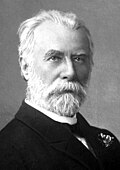
 Denmark
Explanation
Mr. Bajer was a Danish parliamentarian who believed Nordic countries should help each other and stay friends. He told everyone that talking together could stop fights and connected many lawmakers from different nations. He also became a leader of a world peace group called the International Peace Bureau and worked to make countries get along. Thanks to these efforts, the Nordic region avoided big wars for a long time. For this work he received the Nobel Peace Prize.
Related Keywords
International Peace Bureau
Founded in 1891, the International Peace Bureau is one of the world’s oldest peace NGOs. It advanced international arbitration and disarmament through information sharing and lobbying. Bajer, as honorary president, worked to expand its network and financial base. The Bureau, itself a Nobel Peace laureate, continues campaigning for nuclear abolition today.
Inter-Parliamentary Union (IPU)
Established in 1889, the IPU is an international organization of parliamentarians promoting peace and democracy through cross-border dialogue. Bajer was a founding member and built procedures for passing arbitration resolutions in national parliaments. Today the IPU includes around 180 parliaments and cooperates on issues such as the SDGs.
Arbitration treaty
An international agreement in which parties commit in advance to accept third-party adjudication of disputes. Bajer proposed comprehensive arbitration treaties among Nordic states and European powers, influencing treaty drafts at the Hague Peace Conferences.
Scandinavian cooperative diplomacy
A strategy in which Denmark, Norway, and Sweden deter great-power interference through small-state solidarity, maintaining peace via mutual arbitration and cultural exchange. Bajer advanced this diplomacy using both parliamentary and civil-society channels.
Track-II diplomacy
Diplomatic efforts conducted unofficially by civil groups or individuals to build trust outside formal government negotiations. Bajer’s work with the International Peace Bureau is viewed as a pioneering example of Track-II diplomacy.
Arms reduction
A policy that gradually eliminates or limits existing weapons to lower defense costs and war risks. Bajer used quantitative data to demonstrate cost-effectiveness and achieved actual defense-budget cuts through parliamentary debate.
Universal pacifism
The belief that all conflicts should be resolved non-violently, regardless of race, religion, or nationality. Bajer promoted this ideal in his writings and speeches, making it a core principle of the International Peace Bureau.
Hague Peace Conferences
Governmental peace conferences held in 1899 and 1907. Bajer mobilized citizen and parliamentary networks to lobby for the inclusion of arbitration treaties and disarmament on the agenda.