1911 Nobel Peace Prize(1)
Reason for Award
Establishment of the Permanent Court of Arbitration
Laureates
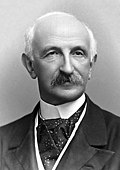
 Netherlands
Explanation
In the past, when countries argued, they often went straight to war. Tobias Asser thought that a "classroom for discussion" could help them settle problems peacefully. This classroom became the Permanent Court of Arbitration. Countries can go there and ask neutral judges—like teachers—to give fair advice. Thanks to this idea, solving problems without weapons became more common.
Related Keywords
international arbitration
International arbitration is a method by which states or companies submit a dispute to a neutral third party for a binding decision. It is more flexible than court litigation because the parties can shape procedures and select arbitrators. The PCA, influenced by Asser, was one of the first permanent bodies devoted to inter-state arbitration. Today, arbitration clauses are common in investment treaties and commercial contracts. Arbitral awards can generally be enforced worldwide, making arbitration a core element of global dispute resolution.
Permanent Court of Arbitration
Created at the 1899 Hague Peace Conference, the PCA is the world’s first multilateral arbitration institution. Its "permanent" character refers to a continuing secretariat, not to standing judges. Each member state lists four arbitrators, from which ad-hoc tribunals are formed for each case. The PCA now administers disputes ranging from environmental and investment conflicts to maritime boundary delimitation. It constitutes a key institutional ancestor of the International Court of Justice and modern arbitration frameworks.
Hague Peace Conference
Convened in 1899 and 1907 at the initiative of Tsar Nicholas II, the Hague Peace Conferences aimed to discuss disarmament and peaceful dispute settlement. They produced the PCA, land-war regulations, and rules limiting certain weapons. Tobias Asser, as a leading member of the Dutch delegation, was instrumental in drafting the conventions. The conferences are widely regarded as the starting point of modern international humanitarian law and institutionalized diplomacy.
private international law
Private international law decides which country’s rules apply in cross-border civil cases. Asser promoted the Hague Conference on Private International Law, proposing uniform rules on marriage, inheritance, and contracts. Although distinct from arbitration, both fields seek to create predictable frameworks for transnational interactions. The Hague Conference still drafts treaties that harmonize commercial and family-law issues. Such groundwork underpins the stability of today’s global legal order.
peaceful settlement of disputes
The peaceful settlement of disputes is a cornerstone of international law, encompassing negotiation, mediation, arbitration, and judicial settlement. It is codified in the Covenants of the League of Nations and the UN Charter, forming the backbone of modern diplomacy. The PCA operationalized this principle at an early stage. Through Asser’s efforts, states learned to see third-party adjudication not as a threat but as a civilized option. Contemporary ICJ judgments and WTO panel reports carry forward the same ethos.