1974 Nobel Peace Prize(2)
Reason for Award
for advocating the Three Non-Nuclear Principles
Laureates
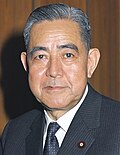
 Japan
Japan
Explanation
Eisaku Satō was a Japanese prime minister who worked hard so Japan would promise “not to possess, not to produce, and not to allow nuclear weapons” in its country. This promise is called the Three Non-Nuclear Principles. By clearly showing Japan’s wish for a world without nuclear weapons, he gave people hope for peace. For that leadership he received the Nobel Peace Prize.
Related Keywords
Three Non-Nuclear Principles
Announced in 1967, Japan’s Three Non-Nuclear Principles are: not possessing, not producing, and not permitting the introduction of nuclear weapons. Although not legally binding, a Diet resolution entrenched them as policy practice. They are viewed as a unique strategy of asserting non-nuclear identity under the U.S. nuclear umbrella. Debates on revision have surfaced after the Cold War, yet the principles remain due to the Atomic Energy Basic Law and strong public support. They serve as a starting point for East Asian denuclearization discussions.
Nuclear Non-Proliferation Treaty (NPT)
Adopted in 1968 and entering into force in 1970, the NPT is an international treaty that divides states into nuclear-weapon and non-nuclear-weapon categories. Its pillars are non-proliferation, disarmament negotiations, and the right to peaceful nuclear use. Japan signed in 1968 and brought it into force in 1976, relatively early for a non-nuclear state. Satō’s decision aligned Japan with the U.S. alliance and strengthened its anti-nuclear image. The treaty remains the cornerstone of the global non-proliferation regime.
Okinawa Reversion
In 1972 the United States returned Okinawa, previously under U.S. administration, to Japanese sovereignty. While the security treaty remained, the removal of nuclear weapons and application of the Status of Forces Agreement were key issues. The Satō government promoted a “same as the mainland” standard, emphasizing non-nuclear and autonomous administration. Later revelations of secret nuclear transit agreements sparked debate, yet officially the reversion achieved denuclearization. The event is studied as a nexus of the U.S.–Japan alliance and Japan’s non-nuclear policy.
extended deterrence
Extended deterrence is a security strategy in which a nuclear-armed state pledges retaliation, including nuclear weapons, on behalf of an ally. Japan relies on the U.S. nuclear umbrella while maintaining its own non-nuclear policy. This arrangement fits the non-proliferation regime yet creates vulnerability through dependence on alliance credibility. The Three Non-Nuclear Principles functioned as a domestic–international balancing device within extended deterrence. The concept is essential to understanding security dilemmas in East Asia.
Article 9 of the Japanese Constitution
Article 9, enacted in 1947, renounces war and prohibits Japan from maintaining armed forces. It supplied a normative backdrop for the non-nuclear principles and pacifism. Ongoing debates concern the Self-Defense Forces and the exercise of collective self-defense. The Satō administration institutionalized non-nuclear policy while balancing Article 9 with the U.S.–Japan Security Treaty. The clause is a frequent subject of peace studies and international-law scholarship.