1907 Nobel Prize in Chemistry
Reason for Award
for his biochemical researches and his discovery of cell-free fermentation
Laureates
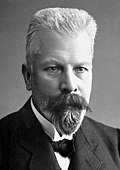
 German Empire
Explanation
Bread dough or fruit juice bubbles because tiny living yeast eat sugar and release gas. Buchner mashed the yeast and removed all the living cells, keeping only the clear liquid. Amazingly, the liquid alone still turned sugar into bubbles of gas. This showed that an invisible ‘helper’ inside the liquid could work even without living yeast cells. The discovery became a big step toward understanding how food is made and how reactions happen inside our bodies.
Related Keywords
cell-free fermentation
A phenomenon in which fermentation proceeds in an extract that contains no living cells. First demonstrated by Buchner and provided key evidence for enzymes.
zymase
The catalytic factor Buchner named in yeast extracts; now known to be a collection of glycolytic enzymes.
enzyme catalysis
The ability of proteins to accelerate chemical reactions dramatically. Recognition of enzyme catalysis was boosted by the discovery of cell-free fermentation.
vitalism
A 19th-century doctrine claiming life processes cannot be explained by chemistry alone. Buchner’s work decisively refuted this view.
yeast extract
A soluble liquid obtained by grinding and filtering yeast cells. Buchner used it to produce fermentation and reveal the presence of enzymes.
ethanol fermentation
The conversion of sugars into alcohol and carbon dioxide. Essential for food and fuel production, and Buchner’s research deepened its mechanistic understanding.
metabolic pathway
A series of stepwise chemical reactions occurring in cells. Establishing cell-free systems allowed detailed analysis of individual pathway steps.