1912 Nobel Prize in Chemistry(1)
Reason for Award
for the discovery of the Grignard reagent
Laureates
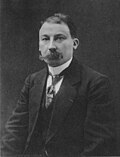
 France
Explanation
When chemists mix magnesium metal with a special liquid called ether and add a carbon compound that carries a halogen, bubbles appear and a very reactive liquid called a “Grignard reagent” is formed. This liquid works like a new glue that helps tiny molecular building blocks stick together. Thanks to it, scientists can make big molecules that become medicines or plastics. Before this discovery, building such molecules was extremely hard, but the new reagent made the task much easier. That is why Grignard’s finding is said to have changed laboratories all over the world.
Related Keywords
Grignard reagent
The term refers to organomagnesium compounds produced from organic halides and magnesium metal, displaying strong nucleophilicity that enables bond formation with many electrophiles. They are usually handled in ether solvents such as diethyl ether or tetrahydrofuran. Acidic work-up is indispensable to isolate the corresponding alcohol products. Because the reagents decompose instantly in the presence of moisture, releasing flammable gases, all operations are conducted under rigorously dry conditions. Their utility ranges from natural-product synthesis to polymer chemistry, and they remain a cornerstone reaction more than a century after their discovery.
organomagnesium compound
These are compounds containing a direct carbon–magnesium bond whose polarity imparts high basicity and nucleophilicity. Besides classical Grignard reagents, highly reactive R2Mg species and magnesium amides belong to this class. They readily react with oxygen or CO₂ to give alkoxides or carboxylates, a reactivity that must be carefully controlled. Their behavior is strongly influenced by solvent and ligand coordination, making them interesting from a coordination-chemistry perspective. They serve as indispensable building blocks in organic synthesis and as precursors to metal-complex catalysts.
carbon–carbon bond formation
Creating C–C bonds is the key step for increasing molecular size and complexity, widely used in the synthesis of drugs and natural products. Grignard reagents add nucleophilically to carbonyl compounds, building alcohol frameworks and inserting new C–C bonds. Modern synthesis combines them with asymmetric catalysts and cross-coupling to improve stereocontrol and functional-group tolerance. Computational chemistry predicts transition states along these pathways, accelerating experimental design. To reduce environmental impact, solvent minimization and flow-chemistry developments are actively pursued.
ether solvent
Diethyl ether and THF donate electron density through their oxygen atoms, coordinatively stabilizing the magnesium center. Because they are highly volatile and flammable, proper ventilation and antistatic measures are essential. A higher donor number improves solubility and reactivity of the reagent but can also promote side reactions. Standard practice is to distill or dry the solvent to remove moisture and peroxides before use. Recently, greener solvents compatible with Grignard chemistry are being investigated.
Schlenk equilibrium
The Schlenk equilibrium describes the reversible redistribution of R–MgX into R₂Mg and MgX₂, depending on solvent polarity and temperature. Its position influences reactivity and selectivity; in some syntheses an excess of R₂Mg can suppress side reactions. NMR and DOSY techniques are employed to analyze the speciation. In catalytic cross-coupling, MgX₂ can deactivate transition-metal complexes, posing challenges. Controlling the equilibrium is therefore a critical parameter for high-efficiency synthesis design.