1912 Nobel Prize in Chemistry(2)
Reason for Award
for his method of hydrogenating organic compounds in the presence of finely divided metals
Laureates
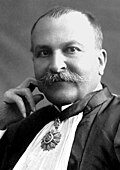
 France
Explanation
When hydrogen is added to vegetable oil, it becomes solid like margarine. Mr. Sabatier discovered a way to let molecules take in hydrogen by mixing them with tiny metal powders. The method changes molecules gently, like using a weak magnet to guide iron filings. Thanks to it, people can safely make foods, perfumes, and fuels. Sabatier’s research therefore supports kitchens and factories alike.
Related Keywords
catalytic hydrogenation
Catalytic hydrogenation adds molecular hydrogen to unsaturated bonds with the aid of a metal catalyst and is indispensable for fat hardening, petroleum upgrading, and pharmaceutical intermediate synthesis. The reaction proceeds under mild conditions and gives high substrate selectivity because few side products form. In heterogeneous systems the metal powder can be recycled, offering both economic and environmental advantages. Current studies hybridize heterogeneous and homogeneous catalysis to improve stereoselectivity. Using green hydrogen produced from renewable energy promises low-CO₂ process designs.
finely divided nickel
Finely divided nickel is the most common catalyst in the Sabatier process; its large surface area endows it with strong hydrogen adsorption capacity. Particle sizes from tens of nanometers to sub-micrometer scales are controlled, and dispersion on alumina or silica supports prevents agglomeration. Trace impurities such as sulfur or phosphorus sharply decrease activity, so feedstock purity is critical. Owing to its magnetism the catalyst can be rapidly recovered with magnetic separation after reaction. Nickel is relatively inexpensive and is therefore studied as a substitute for palladium or ruthenium catalysts.
heterogeneous catalysis
In heterogeneous catalysis the catalyst and reactants occupy different phases—usually solid vs. liquid or gas—making the catalyst easy to separate and reuse. When adsorption and activation occur on metal surfaces, as in Sabatier catalysis, surface-science insights directly inform mechanistic understanding. Advances in in-situ IR spectroscopy and scanning tunneling microscopy allow detection of reaction intermediates on the nanometer scale. Industrial plants use fixed-bed or fluidized-bed reactors, facilitating large-scale operation and temperature control. Designing regeneration steps that prolong catalyst life is economically crucial.
unsaturated compound
Unsaturated compounds such as alkenes, alkynes, and aromatics contain double or triple bonds that can be converted to saturated compounds by catalytic hydrogenation. Higher unsaturation generally accelerates reaction rate but risks over-hydrogenation, which may destroy desired functional groups. Selective hydrogenations employ additives or modified catalysts to stop at the mono-addition stage. In the food sector designing conditions that suppress trans-fat formation is a major challenge. In fine-chemical synthesis, partial hydrogenation strongly influences stereochemistry and optical purity.
industrial hydrogenation process
Industrial hydrogenation is run continuously in large fixed-bed or slurry reactors with automatic control of pressure, temperature, and hydrogen feed rate. To ensure safety, hydrogen concentrations are kept below the lower explosive limit and emergency venting systems are installed. Online analytics such as GC and spectroscopy detect catalyst deactivation, enabling scheduled regeneration and maximum uptime. Heat recovery from by-products and integrated wastewater treatment optimize both energy use and environmental impact. New plants powered by green hydrogen and renewable electricity aim for carbon-neutral operation.