1915 Nobel Prize in Chemistry
Reason for Award
for his researches on plant pigments, especially chlorophyll
Laureates
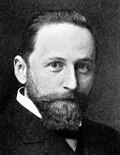
 German Empire
Explanation
Leaves look green because a pigment called chlorophyll absorbs light. Richard Willstätter extracted chlorophyll from leaves and studied its properties in detail. He discovered that chlorophyll is made of two kinds, called a and b. This finding helped people understand how plants perform photosynthesis, the process that turns sunlight into food and oxygen. The oxygen we breathe every day is produced thanks to chlorophyll’s work.
Related Keywords
chlorophyll
Chlorophyll is the green pigment essential for photosynthesis in plants, algae, and cyanobacteria. The molecule contains a central magnesium ion held in a porphyrin ring and absorbs light to generate excited electrons. Besides the common a and b forms, variants such as c, d, and f exist, broadening the spectral range that organisms can harvest. The red and yellow colors of autumn leaves appear when chlorophyll is broken down and other pigments become visible. Understanding chlorophyll’s structure and function has inspired developments in artificial photosynthesis and bio-hybrid solar cells.
porphyrin ring
The porphyrin ring is a large planar macrocycle composed of four pyrrole units linked by methine bridges. When a metal ion is chelated at its center the system acquires diverse biological functions, with Mg in chlorophyll and Fe in heme being classic examples. The extensive conjugated π-electron system gives rise to strong visible absorption bands such as the Soret band, leading to the vivid colors of many porphyrin compounds. Porphyrin derivatives are exploited as photosensitizers, catalysts, and in molecular electronics. Willstätter’s identification of chlorophyll as a porphyrin macrocycle was a key step in defining the field of bioinorganic chemistry.
magnesium complex
The magnesium atom inside a chlorophyll molecule is coordinated by four nitrogen atoms at the macrocycle’s center, tuning the light-absorption energy levels. This metal center modifies electron density and thereby facilitates the initial steps of energy transfer and charge separation. When Willstätter detected magnesium, the idea that a metal could reside in a plant pigment was revolutionary. Later studies showed that replacing Mg with Zn or Ni dramatically alters absorption spectra and fluorescence, a fact now exploited in designing photoactive materials. Understanding how Mg becomes chelated in vivo also provides clues to the evolutionary optimization of photosynthesis.
carotenoids
Carotenoids are orange- to yellow-colored long-chain polyisoprenoid pigments that coexist with chlorophyll and protect the photosynthetic apparatus. They dissipate excess solar energy as heat and quench reactive oxygen species, preventing photo-oxidative damage. During his purification work Willstätter separated and named several carotenoids, highlighting their biological significance. Carotenoids are also vital for human vision and antioxidant nutrition, making them important in food science. Recently, their extended conjugation has been harnessed to create organic photonic materials.
photosynthesis
Photosynthesis is the life-sustaining process by which plants, algae, and photosynthetic bacteria convert carbon dioxide and water into sugars and oxygen using sunlight. Chlorophyll absorbs photons, becomes excited, and initiates an electron-transport chain that stores chemical energy as ATP and NADPH. The Calvin–Benson cycle then fixes carbon to synthesize glucose. Willstätter’s pigment chemistry revealed the molecular basis of the light-absorption step, deepening overall comprehension of photosynthesis. The principles of photosynthesis are now being explored for renewable energy, artificial photosynthetic devices, and biofuel production to combat climate change.