1922 Nobel Prize in Chemistry
Reason for Award
for his discovery, by means of his mass spectrograph, of isotopes in a large number of non-radioactive elements and for his enunciation of the whole-number rule
Laureates
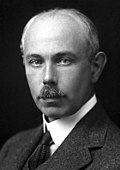
 United Kingdom of Great Britain and Northern Ireland
Explanation
Atoms of each element have a certain weight, but the same element can have “siblings” that are a little heavier or lighter. These siblings are called isotopes. Mr. Aston invented a special machine, the mass spectrograph, to weigh atoms and discovered isotopes in many elements. Because of this, the atomic weights printed in textbooks became more accurate. Today the idea of isotopes helps in things like watch batteries, medical tests, and finding the age of our planet.
Related Keywords
isotope
Atoms of the same element that differ in neutron number. Their chemical behaviour is nearly identical, yet their masses differ, allowing separation by mass spectrometry. Aston proved that many stable elements possess multiple isotopes, prompting a revision of atomic weights. Today isotopes are central to radiometric dating, climate reconstruction through stable-isotope ratios, and numerous other applications.
mass spectrograph
An early mass spectrometer devised by Aston that separates ions using electric and magnetic fields and records their parabolic paths on photographic plates. It can observe several isotopes simultaneously and achieved a mass precision that paved the way for later double-focusing instruments. It is the conceptual ancestor of modern mass spectrometers.
whole-number rule
An empirical rule proposed by Aston stating that the masses of isotopes are nearly integral multiples of the hydrogen mass. Although later refined when mass defects due to nuclear binding energy were recognised, the rule provided an essential clue for the advancement of nuclear physics.
mass spectrometry
An analytical technique that separates and detects ions based on their mass-to-charge ratio. It provides highly sensitive and precise measurements of mass, molecular structure, and isotopic ratios. Aston’s work marked the beginning of the field, which is now indispensable in chemistry, biology, earth sciences, and beyond.
mass defect
The phenomenon that the measured mass of a nucleus is slightly less than the sum of the masses of its constituent protons and neutrons. The missing mass corresponds to nuclear binding energy and is converted to energy via E=mc². It explains deviations from the whole-number rule and is fundamental in nuclear physics.
relative atomic mass
A value defined as the abundance-weighted average of the masses of all isotopes of an element. By measuring isotopic composition, Aston significantly revised the international table of atomic weights. Accurate relative atomic masses are fundamental data for chemical calculations and industrial production.