1923 Nobel Prize in Chemistry
Reason for Award
for his invention of the method of micro-analysis of organic substances
Laureates
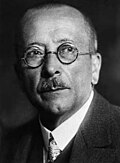
 Austria
Explanation
Fritz Pregl created tools and methods that let scientists find out “what and how much” is inside even a tiny crumb of a substance. Before his work, chemists had to burn or dissolve handfuls of material to learn its ingredients, which wasted rare samples. Pregl weighed speck-sized pieces with an ultra-precise scale, burned them in special glass tubes, collected the gases, and calculated the numbers. Thanks to him, researchers could study expensive medicinal plants or rare animal tissues without using up large amounts. Because this microscope-like way of seeing hidden secrets was so helpful, Pregl received the Nobel Prize in Chemistry.
Related Keywords
microanalysis
An analytical technique for determining elemental composition or chemical quantities from samples weighing only a few milligrams or less. It is essential for studying natural products or drug precursors that are hard to obtain in bulk, and served as a forerunner to today’s high-sensitivity methods such as mass spectrometry and X-ray analysis. Pregl’s miniaturization of equipment while preserving accuracy elevated microanalysis to a standard chemical procedure.
combustion analysis
A method in which an organic sample is burned completely in oxygen and the resulting CO₂, H₂O, N₂, etc., are quantified to calculate elemental ratios. It is based on Liebig’s 19th-century technique, but Pregl lowered detection limits dramatically by adding catalysts and micro-sized tubes. Modern automatic CHN analyzers still rely on the same fundamental principle.
microbalance
An ultra-sensitive scale capable of measuring mass differences below 0.01 mg. By recording the tiny changes in sample or absorbent weight, it underpins the accuracy of microanalysis. After Pregl’s pioneering use, various designs such as magnetic levitation and quartz crystal microbalances were developed and are now applied even in nanomaterial weighing.
organic compound
A broad category of chemicals built on carbon frameworks and containing elements such as hydrogen, oxygen and nitrogen. They underpin medicines, fragrances, plastics and more, yet their composition was hard to fix accurately until the late 19th century. Microanalysis enabled chemists to determine molecular formulas from minute extracts, accelerating the rise of structural organic chemistry.
elemental composition
The ratio or percentage of each element contained in a substance. Reliable elemental composition data are fundamental to deducing chemical structures and balancing reaction equations. Pregl’s technique supplied trustworthy composition figures even for micro-samples, making the identification of unknown compounds far easier.
pharmaceutical research
An interdisciplinary field devoted to discovering and designing compounds that treat or prevent disease. Because it often handles rare natural products and costly intermediates, accurate composition checks via microanalysis are indispensable. Pregl’s method enabled quality control of drug candidates and laid the analytical foundation for the modern pharmaceutical industry.
quantitative analysis
A branch of chemical analysis that expresses the amount of each component in numerical terms. Methods include gravimetry, titrimetry and instrumental techniques; microanalysis may be viewed as the small-sample extreme of gravimetric analysis. Pregl precisely combined mass difference measurements with selective chemical absorbents to achieve highly reproducible quantitation at the microgram level.