1926 Nobel Prize in Chemistry
Reason for Award
for his work on disperse systems
Laureates
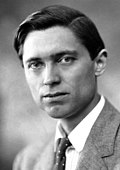
 Sweden
Explanation
If you look closely at milk, you can see tiny white droplets floating in the liquid. A liquid that has many tiny particles spread throughout it is called a “disperse system.” Professor Svedberg invented a special spinning machine, the ultracentrifuge, to watch how fast such particles sink. By comparing the spinning speed with the sinking speed, he could learn the size and weight of the particles. This idea helps scientists study proteins, ink, ice cream and many everyday materials, and it earned him the Nobel Prize in Chemistry.
Related Keywords
disperse system
A disperse system is a state in which solid, liquid or gas particles are uniformly distributed within another phase. The particle size is larger than in true solutions and leads to characteristic phenomena such as sedimentation and light scattering. Everyday examples include milk, fog and paint, making disperse systems important in food engineering and environmental science. Surface charges and adsorption at the interface between particle and medium control the stability of the system. Svedberg supplied the first quantitative method to measure such particles and thus formalized the field.
colloid
A colloid is a type of disperse system whose particle sizes range roughly from 1 nm to 1 µm. Because Brownian motion counteracts gravity, the particles remain suspended and the mixture appears stable. Chocolate drinks and soap foams are familiar colloids. When light passes through a colloid it produces Tyndall scattering, making the light path visible. Svedberg’s work opened the way to analyze colloidal particles on a mass basis.
sedimentation coefficient
The sedimentation coefficient is the rate at which a particle sinks in a centrifugal field normalized by angular velocity and radius; its unit is the Svedberg (S). Larger values indicate heavier or bigger particles. In biology it is used to label ribosomal subunits such as 30S and 50S. The coefficient depends on temperature and solvent density, so precise measurements require corrections. It was defined by Svedberg and remains a key parameter in analytical ultracentrifugation.
ultracentrifuge
An ultracentrifuge spins samples at tens to hundreds of thousands of revolutions per minute, generating extremely high centrifugal forces. These forces can exceed several hundred thousand times Earth’s gravity, separating tiny particles in short times. Svedberg built the first research ultracentrifuge in 1923. Modern instruments are indispensable for DNA purification and virus concentration. Rotor materials engineering and vacuum-cooling technology largely determine machine performance.
Brownian motion
Brownian motion is the random movement of small particles caused by continuous collisions with molecules in a fluid. It means that tiny particles do not simply settle under gravity but also fluctuate constantly. The smaller the particle, the stronger the Brownian contribution, requiring corrections in sedimentation measurements. Svedberg built models in which sedimentation and diffusion compete. These models form the theoretical basis of colloid stability.
Stokes' law
Stokes' law gives the drag force F = 6πηav on a sphere of radius a moving at velocity v in a fluid of viscosity η. It is essential for calculating sedimentation speed and appears in the sedimentation coefficient formula. Because the law is valid only at low Reynolds numbers, corrections are needed for larger particles. Svedberg used Stokesian hydrodynamics to separate particle mass from shape factors. This improved analysis accuracy for non-spherical particles.
molecular weight determination
Determining molecular weight provides fundamental data for understanding chemical properties and designing formulations. Sedimentation is one of the few physical methods that measures weight directly in solution. Svedberg combined sedimentation and diffusion coefficients to determine, for the first time with precision, the molecular weight of non-volatile giant molecules such as proteins. This led to the acceptance of the macromolecule concept and spurred the growth of polymer chemistry. Even today it remains a key technique alongside AUC and mass spectrometry.
particle size distribution
Particle size distribution is a statistical description of how many particles fall within each size range in a system. Knowing the entire distribution, rather than a single mean size, allows accurate prediction of sedimentation behavior and optical properties. Svedberg numerically differentiated concentration profiles obtained from ultracentrifugation and back-calculated the distribution function. This approach revolutionized the assessment of polydisperse systems. Today it is widely combined with laser diffraction and DLS for quality control.