1936 Nobel Prize in Chemistry
Reason for Award
for his contributions to our knowledge of molecular structure through his investigations on dipole moments and on the diffraction of X-rays and electrons in gases
Laureates
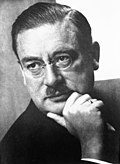
 Netherlands
Explanation
Molecules such as water and ammonia have tiny plus and minus charges separated a little, so they act like very small magnets. The size of this ‘little magnet’ is called the dipole moment. Mr. Debye measured how much molecules turn when an electric field is applied to find that number. He also shone X-rays and electron beams on gases and studied how the beams bounced off to make a kind of shadow picture of the molecules. In this way he was one of the first to reveal the shapes and electrical nature of invisible molecules.
Related Keywords
dipole moment
A physical quantity expressing how far positive and negative charges are separated in a molecule. It is a key factor determining polarity and intermolecular forces.
dielectric constant
A measure of how well a substance stores electric energy when placed in an electric field. Debye’s equation often uses liquid dielectric constants to estimate dipole moments.
X-ray diffraction
A technique that determines atomic arrangements by analyzing the scattering pattern of X-rays hitting matter. Its extension to gases advanced structural chemistry.
electron diffraction
A method that employs fast electrons, which behave as waves with short wavelengths, to measure molecular structures at high resolution. Debye spearheaded its early use on gas molecules.
polar molecule
A molecule possessing a permanent dipole moment. Water or HCl are typical examples, strongly affecting solubility and reactivity.
Debye equation
An expression that derives dipole moments from the temperature dependence of the dielectric constant. It laid the statistical-mechanical foundation for orientation polarization in liquids.
orientation polarization
Polarization that occurs when dipoles align in an electric field. It is a crucial concept in frequency-dependent analysis of dielectric materials.
gas-phase scattering experiments
Experiments in which beams are directed at freely rotating gas molecules and the scattering measured to obtain average structures. They provide data free of intermolecular interactions.
molecular structure
The ‘blueprint’ of a molecule, comprising bond lengths, bond angles and atomic arrangement. It is the starting point for understanding and predicting physical and biological properties.
structural chemistry
The branch of chemistry that explores the relationship between three-dimensional arrangements of molecules or crystals and their properties. Debye’s diffraction studies built its foundation.