1948 Nobel Prize in Chemistry
Reason for Award
for his research on electrophoresis and adsorption analysis, especially for his discoveries concerning the complex nature of serum proteins
Laureates
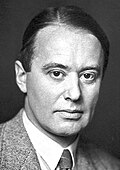
 Sweden
Explanation
Our bodies have blood flowing through them, and that blood contains many important proteins. Dr. Tiselius invented a new tool that uses electricity to separate these proteins according to their properties. It is like using a magnet to pull iron filings away from sand, but here electricity moves proteins into neat lines. When he did this, he discovered that what looks like one simple liquid—serum—actually contains many different kinds of proteins. This finding became a clue for studying diseases and how the body works. Many of the blood tests done in hospitals today give accurate results thanks to his research. So he built an important foundation that helps protect our health.
Related Keywords
electrophoresis
A separation method that exploits the movement of charged particles in an electric field. The migration velocity depends on charge, size, shape, medium viscosity, and field strength. Tiselius enabled continuous observation with the moving-boundary technique, demonstrating for the first time precise quantification in biological systems. The method evolved into gel electrophoresis and capillary electrophoresis, now standard for DNA analysis and protein purification. Clinically, the presence of abnormal bands serves as a diagnostic indicator for disorders such as multiple myeloma.
serum proteins
A group of proteins present in the fluid portion of blood after removal of cells and clotting factors. Albumin maintains osmotic pressure, while globulins perform diverse roles such as immune defense and iron transport. Tiselius showed that these proteins can be subdivided by charge and molecular weight. Today, changes in electrophoretic patterns screen for liver dysfunction, nephrotic syndrome, and immunodeficiencies. Analytical methods have extended to mass spectrometry and proteomics, making serum proteins prime targets in biomarker discovery.
adsorption analysis
A technique that separates and quantifies components by exploiting their selective adsorption onto a solid surface. After electrophoresis, Tiselius adsorbed proteins onto a support and recovered fractions by stepwise elution, pioneering the conceptual basis of ion-exchange chromatography and affinity purification. Analyzing adsorption isotherms yields binding constants, useful for studying molecular interactions. In modern biopharmaceutical manufacturing, the same principle is indispensable in multi-step purification workflows.
mobility
An indicator of the speed at which a charged particle travels per unit electric field during electrophoresis. Generally higher for molecules with greater charge and smaller size. Tiselius continuously recorded mobility distributions, quantitatively assessing protein heterogeneity. Mobility is affected by electro-osmotic flow and temperature gradients, so standardized buffer conditions are critical. In modern capillary electrophoresis, mobility data help estimate isoelectric points and molecular weights.
separation technique
A general term for scientific methods that isolate a target component from a mixture. Electrophoresis uses electric fields, chromatography exploits interactions between mobile and stationary phases, centrifugation employs centrifugal force, and so on. Tiselius’s work enabled high-resolution separation of biomacromolecules, propelling life-science research forward. Today, multi-omics studies and drug discovery rely on hybrid separations that combine several techniques. Balancing resolution with throughput remains the key challenge for next-generation technologies.
isoelectric point
The pH at which a molecule carries no net charge. Proteins possess acidic and basic side chains, and at this pH they do not migrate in an electric field. Tiselius’s data showed that protein bands with different isoelectric points separate under an electric field, leading to the development of isoelectric focusing. The isoelectric point is a key parameter for protein solubility and crystallization conditions, and is important in formulation design. Modern 2-D electrophoresis separates proteins with high resolution along axes of isoelectric point and molecular weight.
chromatography
A technique that separates mixtures by exploiting distribution equilibria between a stationary phase and a mobile phase. Ion-exchange, gel-filtration, and reversed-phase modes evolved as extensions of adsorption analysis. Tiselius’s adsorption procedures laid the theoretical foundation for ion-exchange chromatography, enabling large-scale production of highly purified proteins. Chromatography is indispensable in pharmaceuticals, food testing, and environmental analysis. Recent developments integrate microfluidic platforms and continuous-flow manufacturing, improving efficiency and sustainability.