1950 Nobel Prize in Chemistry
Reason for Award
for the discovery and development of the Diels–Alder reaction (the diene synthesis)
Laureates
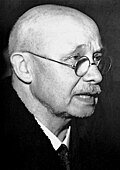
 West Germany
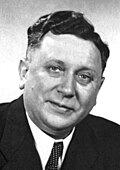
West Germany
Explanation
Chemists Diels and Alder discovered a way for two small molecules to join and form a new ring shaped like a hexagon. This is called the Diels-Alder reaction and it is like gently pressing two puzzle pieces together so they lock. It lets us build raw materials for rubber, vitamins, and many other useful things. The reaction occurs just by warming the mixture; no bright light or strong chemicals are needed. Thanks to this discovery, making plastics and medicines became safer and easier.
Related Keywords
Diels–Alder reaction
The Diels–Alder reaction forms a cyclohexene framework in a single step through a [4+2] addition of a conjugated diene and a dienophile. Discovered in 1928, it became the prototypical thermally allowed pericyclic reaction explained by the Woodward–Hoffmann rules. With minimal by-products and excellent atom economy, it is highlighted in green-chemistry textbooks. It serves as a key ring-building step in the synthesis of pharmaceuticals, agrochemicals, and functional materials. The reverse process, retro-DA, is exploited for molecular fragmentation in analytical chemistry and for designing reversible materials.
diene
A diene is a hydrocarbon containing two double bonds; in a conjugated diene the double bonds are separated by a single bond. The extended π system raises the HOMO energy, increasing nucleophilicity. In the Diels–Alder reaction this high HOMO overlaps efficiently with the dienophile’s LUMO, accelerating the process. Isoprene in natural rubber and butadiene in synthetic rubber are typical dienes. Using dienes substituted with fluorine or nitrogen introduces unique properties into the cycloadducts.
dienophile
A dienophile, literally “diene lover,” is a molecule that reacts with a diene to form a ring, typically containing an electron-poor double bond. Classic examples are C=C bonds bearing electron-withdrawing groups such as in maleic anhydride or acrylonitrile. These groups lower the LUMO energy, narrowing the gap with the diene’s HOMO and speeding up the reaction. Adding a Lewis acid further lowers the LUMO, allowing milder reaction conditions. Heteroatom-containing dienophiles enable oxa-DA or aza-DA variants that introduce hetero rings.
cycloaddition
A cycloaddition is a reaction where two or more molecular fragments unite while creating a ring framework. They are categorized by the number of π electrons involved, such as [4+2], [3+2], or [2+2], and are widely used for skeletal construction in organic synthesis. The Diels–Alder reaction is the archetypal [4+2] cycloaddition, while the Huisgen [3+2] reaction between 1,3-dipoles and alkenes is another famous example. Cycloadditions are often concerted, preserving stereochemistry and thus ideal for stereoselective synthesis of complex molecules. Photochemical [2+2] additions, whose selectivity depends on electronic excitation, further broaden the application palette.
pericyclic reaction
A pericyclic reaction features the simultaneous, concerted making and breaking of bonds accompanied by a cyclic flow of electrons in the transition state. The Woodward–Hoffmann rules, based on orbital symmetry conservation, allow precise prediction of thermal feasibility and reversibility. Because no charged or radical intermediates form, side reactions are minimal and atom economy is excellent. Classic examples include the Diels–Alder reaction, the Cope rearrangement, and electrocyclic ring closures. The ability to reorganize three-dimensional molecular architecture in one step makes pericyclic reactions invaluable in natural-product synthesis and materials chemistry.