1952 Nobel Prize in Chemistry
Reason for Award
for the invention and application of partition chromatography
Laureates
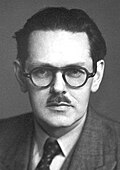
 United Kingdom of Great Britain and Northern Ireland
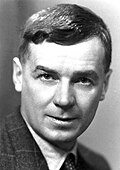
United Kingdom of Great Britain and Northern Ireland
Explanation
If you drop water on a colored marker line, the color sometimes spreads out into different shades on the paper. Partition chromatography uses this same idea in a smarter way. Mr. Martin and Mr. Synge let a liquid move back and forth between two different “papers” (actually two liquids that don’t mix well) so that mixed ingredients come out one by one. Thanks to their idea, scientists can separate tiny molecules like amino acids and vitamins very neatly. Today the method is used every day to make medicines and to check the safety of our food.
Related Keywords
partition chromatography
Partition chromatography exploits the equilibrium distribution of solutes between two immiscible liquid phases. The stationary phase is usually a polar layer such as water or buffer, while the mobile phase is an organic solvent of lower polarity. As solutes shuttle between the phases, differences in partition coefficient determine migration speed. Martin and Synge’s theoretical framework showed that high resolution could be achieved even with simple paper supports. Modern implementations use silica or polymer-packed columns in HPLC and are indispensable for quantitative analysis of complex samples.
chromatography
Chromatography is a family of analytical techniques that separate mixtures into their components using physicochemical interactions between a stationary and a mobile phase. Originating in the late 19th century with plant pigment separation, it has since diversified into gas, liquid, and supercritical-fluid formats. Continuous advances in resolution, sensitivity, and speed have made it central to pharmaceutical development, food safety, and environmental science. Detectors such as UV, fluorescence, and mass spectrometry are now routinely coupled, enabling multidimensional separations and high-sensitivity detection. In the 21st century, integration with microfluidic chips and automation platforms has transformed it into a cornerstone of high-throughput analysis.
stationary phase
The stationary phase temporarily retains solutes in chromatography and can be silica gel, cellulose, or polymeric supports. In partition chromatography, water or another highly polar solvent is immobilized on the support surface, and solutes repeatedly adsorb and desorb. The stationary phase’s chemical functionality (surface groups, energy) and morphology (particle size, pore size) critically influence resolution and peak shape. Optimization relies on parameters such as theoretical plates, eddy diffusion, and mass transfer resistance. Recent innovations include monolithic columns and nanoporous materials that permit high-efficiency separations with low back pressure.
mobile phase
The mobile phase is the fluid that carries the sample through the stationary phase, and may be liquid or gas. In partition chromatography, a non-polar organic solvent is common, and separation arises from differences in solubility and affinity relative to the stationary aqueous layer. Composition, pH, ionic strength, and gradient programming of the mobile phase are key factors controlling retention times and peak resolution. In high-performance liquid chromatography, pump precision and solvent degassing are critical for reproducibility. From a green-chemistry perspective, aqueous mobile phases and supercritical CO₂ are being explored to reduce environmental impact.
amino acid analysis
Amino acid analysis quantifies amino acids in proteins or foods, and partition chromatography marked its historical beginning. Because each amino acid differs in polarity and charge, interactions with the stationary phase vary, leading to orderly separation. After hydrolysis, samples are derivatized and detected visually or by fluorescence, achieving picomole-level sensitivity. Results are applied to nutritional evaluation, diagnosis of metabolic disorders, and quality control of biopharmaceuticals. Modern methods use HPLC or capillary electrophoresis, yet the underlying principles descend directly from the work of Martin and Synge.
paper chromatography
Paper chromatography is the simplest form of chromatography, using filter paper as the support, and has been widely employed in education and research. Cellulose fibers in the paper retain water, which serves as the stationary phase. When a developing solvent is introduced, capillary action moves the solvent front, and solutes partition and migrate along the flow. Unknown samples can be identified by comparing Rf values, and the method is inexpensive. Applications range from food additive testing to identification of plant pigments.
high-performance liquid chromatography (HPLC)
HPLC employs high-pressure pumps to drive the mobile phase through a column packed with fine particles, achieving high-efficiency separation. Building on Martin and Synge’s theory, optimization of particle size, column length, and pressure dramatically increases theoretical plates. Detectors—UV, fluorescence, mass spectrometry—enable simultaneous qualitative and quantitative analysis. It is indispensable for impurity profiling of pharmaceutical raw materials and traceability of environmental pollutants. Recent advances include ultra-high-pressure LC (UHPLC) and microflow LC, reducing analysis time and solvent consumption.
adsorption
Adsorption is the accumulation of molecules on a solid or liquid surface and forms part of the retention mechanism in chromatography. Although partition chromatography is mainly governed by solubility differences, weak adsorption to the stationary phase also influences separation behavior. Adsorption isotherms (Langmuir, Freundlich) help predict retention time and peak symmetry. Changes in temperature or pH alter adsorption energy, enabling tuning of selectivity. In environmental chemistry, similar theories are applied to evaluate the adsorption capacity of activated carbon and zeolites.