1953 Nobel Prize in Chemistry
Reason for Award
for his research on chain-like macromolecular compounds
Laureates
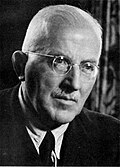
 West Germany
Explanation
Plastics and rubber are made of very long molecules that look like tangled strings. Hermann Staudinger called these long strings “polymers” and proved that they are really single, chain-like molecules. Most scientists then thought many small molecules were just loosely stuck together, so his finding was a big surprise. Because we now understand polymers, people can make light and strong toys, stationery, or car bumpers. Much of the comfort in our daily lives comes from this discovery.
Related Keywords
polymer
A polymer is a giant molecule in which hundreds to millions of small units called monomers are linked into a long chain. Natural examples include cellulose, DNA, and proteins, while synthetic examples are polyethylene and nylon. As the chain length grows, materials become more viscous and their solubility, melting point, and mechanical properties change dramatically. Staudinger was the first to propose that polymers are single long chains held together by covalent bonds. This concept underlies modern materials science and has enabled the development of plastics, fibers, and elastomers.
polymerization
Polymerization is the chemical process in which monomers link together to form polymers. In addition polymerization, double bonds open and the chain grows, whereas in condensation polymerization small molecules like water are eliminated as by-products while bonds form. By controlling reaction rates and chain termination, chemists design molecular weight and distribution. Staudinger’s polymerizations of styrene and isoprene illuminated the chain-growth mechanism. Today, radical, ionic, ring-opening, and living polymerization methods provide diverse synthetic routes.
molecular weight
Molecular weight is the sum of the relative atomic masses constituting a molecule; in polymers it ranges from thousands to millions. Number-average (Mn) and weight-average (Mw) values, along with the dispersity index (Ð), describe the distribution. Techniques such as osmometry and gel permeation chromatography are used to measure polymer molecular weight. Staudinger showed that enormous molecular weights disproved the colloid model of aggregated small molecules. Molecular weight critically influences material strength, melt viscosity, and biodegradability.
nylon
Nylon is a synthetic fiber developed in the 1930s through condensation polymerization of diamines and dicarboxylic acids. With high strength and abrasion resistance, it is used in stockings, parachutes, and even guitar strings. Extensive hydrogen bonding produces crystalline domains that enhance mechanical properties. The success of nylon validated Staudinger’s theory that polymer chains determine material properties. Current research focuses on recycled and bio-based nylons.
natural rubber
Natural rubber is polyisoprene harvested from the latex of Hevea trees and has long been used as an elastic material. Staudinger showed that it consists of long chains with molecular weights in the hundreds of thousands and explained elasticity via cross-link networks. Vulcanization with sulfur dramatically improves thermal stability and strength. Tires, gloves, and hoses all rely on natural rubber. Allergy prevention and sustainable harvesting are active research topics today.
polyethylene
Polyethylene is the most produced plastic in the world, obtained through addition polymerization of ethylene. High-density (HDPE) and low-density (LDPE) grades differ in chain branching, leading to different mechanical properties and clarity. Without Staudinger’s long-chain model, understanding such structure–property relationships would have been impossible. It is lightweight and chemically resistant, used in packaging films, pipes, and medical devices. The microplastic crisis is driving urgent research into degradable versions and efficient recycling technologies.