1955 Nobel Prize in Chemistry
Reason for Award
for elucidating the structure and achieving the total synthesis of biologically important sulfur-containing compounds, especially the peptide hormones oxytocin and vasopressin
Laureates
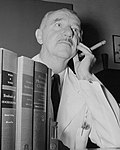
 United States of America
Explanation
Inside our bodies, tiny messengers called hormones carry important signals. Dr. du Vigneaud figured out the exact shape of two hormones, oxytocin and vasopressin. He then managed to build these same molecules from scratch in the laboratory. It is like looking at a Lego model once and rebuilding it perfectly without instructions—very hard to do! His success opened new ways to make medicines and help people stay healthy. The discovery shows how chemistry can support doctors in curing diseases.
Related Keywords
oxytocin
A cyclic nonapeptide hormone that facilitates labor and milk ejection. Two cysteine residues form a disulfide bond creating the looped backbone. Du Vigneaud achieved its first total synthesis, demonstrating identical bioactivity to the natural product. Synthetic oxytocin is now widely used in obstetrics and studied in neuroscience for its role in social behavior. It stands as a cornerstone molecule for peptide drug design.
vasopressin
An antidiuretic hormone secreted from the posterior pituitary that enhances water reabsorption in renal collecting ducts. Like oxytocin it is a cyclic nonapeptide, differing by three amino acids. The disulfide bridge formed by cysteines made reduction–oxidation experiments crucial for its analysis. Du Vigneaud used partial hydrolysis and peptide mapping to determine its sequence and initiated synthetic studies. The molecule underpins modern drugs for hyponatremia and related disorders.
peptide hormone
A class of relatively small hormones composed of linear or cyclic chains of amino acids. They initiate intracellular signaling by binding to specific receptors. Because they can be produced chemically or via recombinant DNA, they are attractive drug candidates. Du Vigneaud’s synthesis proved that peptide hormones can be recreated in the laboratory, influencing later therapeutics such as insulin analogs and GLP-1 drugs. They remain key molecules in structure–activity relationship studies.
disulfide bond
A covalent linkage between two cysteine residues that stabilizes protein and peptide tertiary structures. In small cyclic peptides like oxytocin and vasopressin, it imposes major conformational constraints relative to molecule size. Successful chemical synthesis relies on protective-group strategies and controlled oxidation to form the correct bridge. Du Vigneaud used I2 oxidation to re-establish the native bond. Disulfide mapping is also indispensable in quality control of biopharmaceuticals.
total synthesis
The laboratory construction of a natural product entirely from simple, non-biological materials. It not only confirms structural assignments but also enables large-scale production and rational analog design. At the time, total synthesis of a peptide hormone was unprecedented and widely thought impossible due to complexity. Du Vigneaud’s accomplishment pushed the technical limits of organic chemistry and transformed the practice of natural-products research. Total synthesis remains a central concept in drug discovery and chemical biology.
chromatography
A separation technique based on differential interactions of components with a mobile and a stationary phase. Du Vigneaud employed paper chromatography to separate partial hydrolysis fragments, providing clues for sequence determination. Today, liquid chromatography and HPLC are indispensable for assessing peptide purity. Scale-up of hormone synthesis likewise relies on chromatography to remove impurities and epimers. The method is a foundational tool applied from molecular biology to environmental analysis.