1957 Nobel Prize in Chemistry
Reason for Award
for his work on nucleotides and nucleotide co-enzymes
Laureates
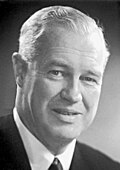
 United Kingdom of Great Britain and Northern Ireland
Explanation
Our bodies are made of tiny parts. One kind is a molecule called a nucleotide, which carries energy and genetic messages. Lord Todd studied what nucleotides look like and how they work. ATP, which is like a battery, and the letters that make DNA are both nucleotides. Because of Todd’s discoveries, scientists can now make and study these molecules in the lab. This knowledge helps create new medicines today.
Related Keywords
nucleotide
A nucleotide is a compound formed from a base, a pentose sugar, and phosphate groups, serving as the basic unit of DNA and RNA. In the triphosphate form, such as ATP or GTP, it acts as a cellular energy carrier. Nucleotides also participate in signal transduction and serve as co-factors for enzymes. Lord Todd elucidated their chemical structures and devised practical synthetic routes. This enabled scientists to manufacture specific sequences and modified variants, catalyzing rapid progress in molecular biology.
coenzyme
Coenzymes are small organic molecules that loosely bind to enzymes and assist catalytic reactions. Many, such as NAD+, FAD, and CoA, contain nucleotide moieties. They transiently hold electrons or chemical groups and can be recycled. Todd’s work demonstrated the importance of phosphate linkages and sugar components in coenzymes and explained their orientation within active sites. This facilitated functional analysis of metabolic pathways and rational design of pharmacological inhibitors.
ATP
Adenosine triphosphate (ATP) is known as the cell’s “energy currency,” releasing about 30 kJ/mol of free energy when its phosphate bond is hydrolyzed. Lord Todd achieved pure chemical synthesis and structural determination of ATP, showing that its triphosphate chain is linearly connected. The ATP produced by his methods became a standard reagent in enzymology, enabling studies of myosin motility, photosynthetic photophosphorylation, and more. Today ATP is even harnessed in biosensors and nano-machines. In vivo, it is mainly generated by oxidative phosphorylation in mitochondria.
NAD+
Nicotinamide adenine dinucleotide (NAD+) is a coenzyme that shuttles electrons in redox reactions. The oxidized NAD+ and reduced NADH form a pair that mediates many dehydrogenase reactions. Todd clarified that two nucleotide units in NAD+ are linked via a pyrophosphate bond and established its synthetic pathway. Chemists could then create labeled derivatives and inhibitor analogues. In modern studies, NAD+ also attracts attention as a substrate for sirtuin enzymes involved in lifespan and epigenetics.
phosphorylation
Phosphorylation is the addition of a phosphate group to a molecule, regulating energy storage and signal transduction. Todd’s work supplied synthetic means to replicate phosphate bond formation and cleavage and analyzed the chemical stability of nucleotide triphosphates in detail. In cells, kinase enzymes use ATP to phosphorylate proteins, altering their activity, while phosphatases remove the phosphate to reset the system. Drug discovery often targets these phosphorylation pathways in cancer and inflammation. Todd’s achievements laid the groundwork for understanding such phosphate-based networks.
phosphodiester bond
A phosphodiester bond links two sugar molecules through a phosphate group and forms the backbone of DNA and RNA. Lord Todd investigated its chemical formation and cleavage, proposing protecting-group strategies that enhanced oligonucleotide synthesis efficiency. He showed that hydrolytic stability of phosphodiesters depends on pH and metal ions, providing fundamental data on nucleic-acid stability. Modern automated DNA/RNA synthesizers employ the phosphoramidite approach derived from this knowledge. The concept is also indispensable in the chemical design of antisense and siRNA therapeutics.