1958 Nobel Prize in Chemistry
Reason for Award
for his work on the structure of proteins, especially that of insulin
Laureates
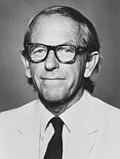
 United Kingdom of Great Britain and Northern Ireland
Explanation
Our bodies are made of many tiny parts called proteins. A protein is like a bead necklace in which each bead is an amino acid arranged in a specific order. Mr. Sanger was the first in the world to find the complete order of the beads in insulin, the hormone that lowers blood sugar. His discovery showed that proteins have fixed instructions written in their sequence. This became a big clue to understanding how living things work properly.
Related Keywords
insulin
Insulin is a hormone produced by pancreatic β-cells that lowers blood glucose levels. It consists of two polypeptide chains, A and B, joined by disulfide bonds. Sanger’s work revealed, for the first time, the complete 51-residue primary structure of insulin. Knowing this sequence enabled chemical synthesis and improvement of insulin preparations, markedly advancing diabetes therapy. It also serves as a classic model for studying the relationship between protein sequence and function.
primary structure of proteins
The primary structure refers to the linear sequence of amino acids in a protein. In the early 20th century, scientists questioned whether such giant molecules possessed regular sequences at all. Sanger’s analysis of insulin proved that proteins carry precise information, analogous to the letters in DNA and RNA. This realization encouraged efforts to predict secondary and tertiary folding and biological function from sequence data. It now underpins structural biology and bioinformatics.
Sanger method
The Sanger method labels the N-terminal amino acid with DNFB and rebuilds the sequence by overlapping peptide fragments. The workflow involves labeling, partial hydrolysis, two-dimensional paper chromatography, and overlap analysis. Independent fragments fit together like pieces of a jigsaw puzzle, revealing the entire sequence. It is regarded as the conceptual ancestor of high-throughput Edman degradation and mass-spectrometric sequencing. The technique pioneered the field now known as chemical protein sequencing.
dinitrofluorobenzene (DNFB)
DNFB is an aromatic reagent that undergoes electrophilic substitution with amino groups to form yellow DNP derivatives. Sanger exploited it to visualize only the N-terminal amino acid of peptides. DNP-labeled fragments show strong absorbance on chromatograms, making their spots easy to identify. Because peptide bonds remain intact after reaction, sequence information is preserved for analysis. DNFB introduced the concept of selective labeling into protein chemistry and stands as a landmark reagent.
peptide sequencing
Peptide sequencing is a foundational tool in protein research, employing methods such as the Sanger technique, Edman degradation, and mass spectrometry. Sequence data are essential for identifying active sites, analyzing mutations, and validating drug targets. The overlapping fragment strategy pioneered in insulin work was later automated, allowing many sequences to be read in a single day. Today, tandem mass spectrometry dominates the field, reconstructing sequences from femtomole-scale samples with high accuracy. Comparisons with sequence databases now enable instant evolutionary and functional predictions.
diabetes mellitus
Diabetes mellitus is a disease in which blood glucose remains chronically high due to insufficient insulin secretion or action. Sanger’s findings directly improved the purity and chemical synthesis of insulin preparations, increasing their efficacy and safety. Knowing the primary structure allowed the rational design of insulin analogs and long-acting formulations. Molecular insight into the disease also deepened, accelerating studies of insulin-receptor signaling and genetic factors. His work laid a cornerstone for the modern biopharmaceutical industry’s development of peptide hormones.