1963 Nobel Prize in Chemistry
Reason for Award
for the discovery and fundamental studies of polymerization processes using novel catalysts
Laureates
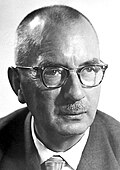
 West Germany

 Italy
Italy
Explanation
Plastic is a “polymer,” a long chain made when many small molecules join hands. Mr. Ziegler and Mr. Natta found special helpers called “catalysts” that speed up and guide this chain-making job. With these catalysts, the molecules line up quickly and neatly, like LEGO bricks, and become strong plastic. Thanks to them, factories can make plastic without giant machines or very high temperatures. Shopping bags, lunch boxes, toys, and many other items can now be produced cheaply and in huge amounts because of this discovery. Their research therefore makes our everyday lives easier and more convenient.
Related Keywords
Ziegler–Natta catalyst
A Ziegler–Natta catalyst is a multicomponent catalyst formed by combining an alkyl-aluminum compound with a transition-metal halide. It polymerizes olefins such as ethylene and propylene via a coordination–insertion mechanism, yielding highly crystalline polyolefins. Karl Ziegler first produced high-density polyethylene in 1953; Giulio Natta followed in 1954 with stereoregular polypropylene, and the catalyst now bears both names. Catalysts are broadly classified into heterogeneous solids (e.g., TiCl3/MgCl2) and soluble homogeneous systems such as metallocenes. On the industrial scale, solid catalysts dominate and produce tens of millions of tonnes of polyolefins annually under low-pressure conditions. Recent advances in electron donors and support technology have enabled precise control over stereoselectivity, molecular-weight distribution, and copolymerization ability.
high polymer
A high polymer is a giant molecule composed of more than ten thousand atoms covalently linked together. Natural high polymers include cellulose and proteins, while synthetic ones include nylon and polyethylene. Larger molecular weight generally leads to higher melt viscosity and improved mechanical and chemical resistance. Structural regularity—such as stereoregularity, branching, and comonomer sequence—strongly influences material properties. High-density polyethylene and isotactic polypropylene obtained with Ziegler–Natta catalysts are highly crystalline and therefore possess superior heat resistance and stiffness. Polymer chemistry underpins modern materials science, medicine, and energy technology, making it indispensable to contemporary society.
stereoregularity
Stereoregularity describes how substituent groups are spatially arranged along a polymer backbone. For asymmetric monomers like propylene, arrangements are classified as isotactic (all on one side), syndiotactic (alternating), or atactic (random). Ziegler–Natta catalysts can selectively produce isotactic or syndiotactic chains through their surface geometry. High stereoregularity promotes crystallinity, sharply increasing melting temperature, Young’s modulus, and heat-deflection temperature. Control of stereoregularity is achieved by modifying the symmetry and electronics of the metal catalyst; modern metallocenes are prominent examples of such precision. Analytical techniques such as 13C NMR and wide-angle X-ray scattering correlate tacticity with physical properties.
high-density polyethylene
High-density polyethylene (HDPE) is a nearly linear polyethylene with few branches and a typical density around 0.94 g/cm³. Ziegler’s catalyst enabled its synthesis at low pressure and low temperature, a feat impossible with earlier high-pressure radical processes. Owing to its high crystallinity, HDPE exhibits superior tensile strength, impact resistance, and chemical resistance, making it widely used in pipes, containers, caps, and toys. Molecular weight and distribution are tuned by the nature of catalyst active sites and operating conditions, making HDPE a prime example of structure-property correlation. It is produced in huge quantities by gas-phase fluidized-bed reactors, with global demand exceeding tens of millions of tonnes annually. Because HDPE is readily recyclable, its recovery and reuse are key to achieving a circular economy.
isotactic polypropylene
Isotactic polypropylene (i-PP) is a polypropylene in which all methyl groups are arranged on the same side, giving high stereoregularity. In 1954, Natta modified the Ziegler–Natta catalyst to synthesize i-PP, revealing a material with high melting point and crystallinity. Despite its low weight, i-PP offers high stiffness and heat resistance, so it is widely used in car parts, appliance housings, fibers, and more. Its properties depend on crystal forms (α, β, γ) and transitions; adding nucleating agents to control these forms improves processing characteristics. Random copolymerization with ethylene yields impact copolymers that balance toughness and transparency and are commercially important. Enhancing i-PP performance today relies on fine tuning tacticity with metallocene and post-metallocene catalysts.
coordination polymerization
Coordination polymerization is a polymerization mode in which a monomer first coordinates to a transition-metal center and then inserts into a metal–carbon bond, extending the chain. Olefin polymerization with Ziegler–Natta catalysts is the archetype; unlike radical polymerization, it offers easy control of stereochemistry and molecular weight. The monomer π-bonds to the metal’s d orbitals, undergoes 1,2-insertion into the σ-alkyl metal bond, and leaves a vacant site for the next monomer to coordinate. Polymers produced by coordination mechanisms often have few branches and exhibit enhanced crystallinity and mechanical properties. Advances in catalyst design have broadened the scope to cycloolefins, acrylates, carbon monoxide copolymerization, and more. The theory of coordination polymerization continues to evolve through integrated studies in organometallic chemistry, surface science, and computational chemistry.