1966 Nobel Prize in Chemistry
Reason for Award
for his fundamental work concerning chemical bonds and the electronic structure of molecules by the molecular orbital method
Laureates
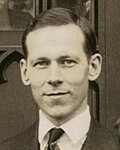
 United States of America
Explanation
Robert Mulliken invented a special way to find out where electrons sit inside a molecule. Electrons are tiny and invisible, but they spread out like clouds and help form molecules. Mulliken’s method lets scientists predict where the densest parts of those clouds are by using calculations. Thanks to that, we can understand how substances stick together or come apart. Modern medicines and plastics are made more safely and efficiently with this idea.
Related Keywords
molecular orbital method
A technique that builds molecular orbitals as linear combinations of atomic orbitals and solves the Schrödinger equation approximately. It yields bond orders, bond energies, and charge distributions, making it indispensable from organic chemistry to materials science. Mulliken’s work established practical handling of normalization and overlap matrices, enabling application to real molecules.
Mulliken population analysis
An analysis that distributes electrons and bonding contributions among atoms using MO coefficients and overlap integrals. It evaluates atomic charges and bond orders, guiding discussions of reactivity and polarity. It laid the foundation for more advanced NPA and AIM analyses in computational chemistry.
HOMO and LUMO
The highest occupied molecular orbital (HOMO) and lowest unoccupied molecular orbital (LUMO) are frontier orbitals controlling reaction initiation and electron-transfer pathways. Their energy gap governs molecular stability, optical absorption, and semiconductor behavior, serving as a key parameter in materials design.
overlap integral
A numerical measure of how much two atomic-orbital wavefunctions overlap. Large values indicate shared electron density and favor strong bonding. In MO theory it is incorporated into the Hamiltonian matrix for eigenvalue calculations.
quantum chemistry
The discipline that applies quantum mechanics to study atomic and molecular structure and properties. Mulliken’s work helped systematize quantum chemistry and stimulated the development of computational software. It is now indispensable in drug discovery, energy materials, polymer research, and more.
Linear Combination of Atomic Orbitals (LCAO)
An approximation representing a molecular orbital as a superposition of several atomic orbitals. It is mathematically tractable and describes many-electron systems with a reduced basis set. It serves as the starting point for nearly all MO calculations.
Frontier Molecular Orbital Theory
A theory developed by Kenichi Fukui that explains reactivity by focusing on the HOMO and LUMO. It is built on Mulliken’s molecular-orbital concepts and is widely used to predict positional selectivity and kinetics in organic reactions.