1967 Nobel Prize in Chemistry
Reason for Award
for their studies of extremely fast chemical reactions, effected by disturbing the equilibrium by means of very short pulses of energy
Laureates
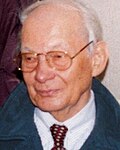
 West Germany
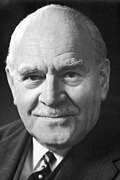
 United Kingdom of Great Britain and Northern Ireland
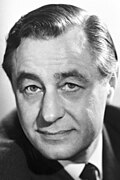
United Kingdom of Great Britain and Northern Ireland
Explanation
A chemical reaction is like cooking: ingredients mix and change. Manfred Eigen, Ronald Norrish and George Porter invented ways to find out just how fast these changes happen. Imagine using a camera flash to freeze a flying ball in mid-air; they did something similar by giving the reacting molecules a tiny burst of light or electricity. Right after the burst they peeked at the mixture with special instruments. In this way they watched events that are millions of times faster than a blink of an eye. Their ideas now help speed up medicine making and teach us how plants use light in photosynthesis.
Related Keywords
ultrafast chemical reaction
A reaction that finishes in less than a microsecond. Ordinary test-tube methods cannot follow it, but pulse techniques and time-resolved spectroscopy make the chain of intermediates visible. Such reactions are crucial in pharmacology, combustion chemistry and gas-phase processes. Knowing their kinetic parameters allows deliberate control and design of reactions. The field has progressed to femtosecond and picosecond studies with modern lasers.
flash photolysis
A technique that uses an intense short light pulse to excite or dissociate molecules, then records time-resolved absorption changes. Developed by Norrish and Porter, it elucidated radical chemistry in phosgene, hydrogen peroxide and many other systems. It has been applied to the formation of P680+ in photosynthesis and to vitamin B12 photochemistry. Shorter pulse widths allow probing faster steps, driving the switch from xenon flash lamps to lasers. The method underlies modern pump-probe spectroscopy.
relaxation method
A kinetic analysis technique in which an equilibrium system is suddenly perturbed by temperature, pressure or electric field and its return to equilibrium is monitored. Eigen’s temperature-jump apparatus is a classic example, opening the microsecond domain to study. Mathematically, multi-exponential decays are treated as an eigenvalue problem, allowing multiple pathways to be separated. Ion association, acid–base equilibria and protein folding have all been explored. Modern instruments combine laser T-jump with pressure-jump for even broader applicability.
stopped-flow technique
A method in which two solutions are rapidly mixed and the flow is abruptly stopped, allowing absorbance or fluorescence detection of processes around 0.1 ms. Although slower than flash photolysis, it needs no light pulse and can handle colorless samples. Extensively used for enzyme kinetics and early protein folding events. Advances in flow path design have pushed dead times down to tens of microseconds. Coupling with small-angle X-ray scattering now enables simultaneous structural observation.
radical reaction
Reactions involving radicals, species with an unpaired electron, are energetically high and transient, making them hard to study. Flash photolysis enabled direct measurement of formation and decay of many radicals such as halomethyl and chlorine oxide. Understanding these processes is essential for air-pollutant formation and polymer manufacturing. Rate constants improve reaction models and contribute to safer industrial design. Coupling with electron spin resonance now permits nanosecond-scale tracking of spin dynamics.