1969 Nobel Prize in Chemistry
Reason for Award
for the development of the concept of conformation and its application in chemistry
Laureates
 United Kingdom of Great Britain and Northern Ireland
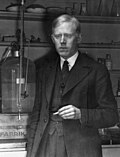
 Norway
Explanation
Everything we see or eat is made of tiny particles called molecules. Even when the molecules are of the same kind, parts of them can twist like arms or legs and take different poses. Sir Barton and Dr. Hassel discovered that these different poses change how a molecule behaves. By finding out which pose is the most comfortable and lasts the longest, scientists can make better medicines and plastics. This “pose” idea is called a conformation. Their work is like learning the secret dance moves of molecules.
Related Keywords
conformation
The three-dimensional pose of a molecule arising from rotation about single bonds. The lowest-energy conformation largely controls reactivity and physical properties.
conformational analysis
A methodology that determines energy differences between conformers through experiments and calculations to identify the preferred form; essential for mechanism prediction and drug design.
cyclohexane chair form
The most stable conformation of cyclohexane, minimizing steric strain; about 6 kJ/mol more stable than the boat form.
steric hindrance
Repulsive energy increase when atoms or substituents approach too closely; a key factor in conformer stability and reaction selectivity.
Newman projection
A drawing method that views front and back carbons along a bond line, making conformers easy to compare visually.
stereochemistry
The branch of chemistry dealing with three-dimensional arrangements of atoms and their chemical consequences; conformation is a central concept.
reaction mechanism
A detailed model describing the pathway of a chemical reaction; conformations define transition-state geometry and thus help elucidate mechanisms.
X-ray crystallography
An experimental technique determining atomic positions from X-ray diffraction of crystals; provides decisive evidence for conformational analysis.