1971 Nobel Prize in Chemistry
Reason for Award
for his contributions to the knowledge of the electronic structure and geometry of molecules, particularly free radicals
Laureates
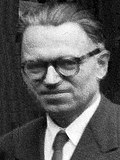
 Canada,
  West Germany
Explanation
Molecules are tiny “houses” made of atoms stuck together. Dr. Herzberg shone light on these houses to see their shapes and where the electrons live. He focused on “free radicals,” special pieces of molecules that react very quickly. It is like finding a hidden insect in the dark with a flashlight. Thanks to his work, scientists learned how to build molecules more cleverly when making medicines or plastics.
Related Keywords
free radical
Because free radicals contain unpaired electrons, they are highly reactive and act as key initiators or intermediates in chemical reactions. Herzberg pioneered spectroscopic techniques to directly measure their electronic configurations and vibrational states despite their fleeting lifetimes. The molecular constants he obtained are crucial for modeling combustion processes, oxidative reactions in living systems, and mechanisms of atmospheric pollution.
electronic structure
Electronic structure refers to the arrangement of orbitals and energy levels occupied by electrons within a molecule. Herzberg’s high-resolution spectral analysis greatly improved the reliability of experimentally determined electronic structures, providing touchstones for validating theoretical calculations and guiding the design of novel catalysts.
molecular spectroscopy
Molecular spectroscopy comprises techniques that analyze how molecules absorb or emit light to reveal their structures and motions. Herzberg employed ultraviolet, visible, infrared, and microwave regions, providing a comprehensive evaluation of vibrational, rotational, and electronic transitions. His work strongly influenced modern developments such as laser and terahertz spectroscopy.
absorption spectrum
An absorption spectrum plots how strongly a substance absorbs light at each wavelength and acts as a fingerprint of its energy levels. Herzberg improved echelle spectrographs and interferometers to reach resolutions that reveal fine structures. These spectra are now stored in international databases and consulted by researchers across many disciplines.
interstellar molecule
Interstellar molecules reside in cosmic gas clouds and star-forming regions and provide clues to chemical evolution and the origins of life. Herzberg’s laboratory measurements helped identify previously unknown spectral lines in astronomical data, leading to early detections of molecules such as H2O+ and CH+. His values are still cited in analyses with facilities like ALMA.
electron spin resonance
Electron spin resonance (ESR) measures magnetic properties of substances with unpaired electrons and is essential for radical studies. Herzberg’s optical data serve as reference points for ESR analyses, enabling complementary determination of spin states and g-values.
molecular geometry
Molecular geometry, defined by bond lengths and angles, dictates reactivity and physical properties. Rotational constants extracted from high-precision spectra allow geometry to be estimated with picometer accuracy. Herzberg’s achievements revolutionized structure determination for gaseous and unstable species that are inaccessible to X-ray crystallography.