1972 Nobel Prize in Chemistry(1)
Reason for Award
Determination of the amino acid sequence of the ribonuclease molecule
Laureates
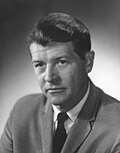
 United States of America
Explanation
Inside our bodies there are many tiny tools called proteins. A protein is like a necklace made of beads called amino acids, linked in a specific order. Dr. Anfinsen carried out a big experiment to find out exactly what order those beads are in. When we know the order, we can guess how the protein folds and works. It is as if we finally got the instruction sheet for building the LEGO model.
Related Keywords
ribonuclease
A general term for enzymes that cleave RNA. RNase A, a 124-residue pancreatic protein, was Anfinsen’s model system. Because of its simple catalytic mechanism and high stability, it became a classical model in folding studies. It is still widely used in enzyme chemistry and structural biology courses.
amino acid sequence
The primary structure of a protein, denoting the order of 20 amino acids from the N-terminus to the C-terminus. Altering the sequence can drastically change folding and function, so it is often termed the biological “code.” Modern sequencing uses automated machines and mass spectrometry, whereas in the 1970s chemical degradation and chromatography were standard.
protein folding
The process in which a primary sequence self-organizes into a three-dimensional structure within seconds to minutes. Misfolding can lead to diseases such as Alzheimer’s. Anfinsen’s experiments demonstrated that folding is reversible and thermodynamically determined.
Edman degradation
A chemical method that sequentially removes and identifies one amino acid at a time from the N-terminus of a polypeptide. It served as the gold standard for sequence determination for decades, though it is laborious for long chains. It is now largely supplanted by mass spectrometry.
disulfide bond
An ‑S-S- link formed between cysteine residues that stabilizes proteins. RNase A contains three disulfide bonds, and the native pairing is essential for activity. Anfinsen controlled their reformation through redox manipulation.
thermodynamic hypothesis
The idea that a protein’s final structure is the state of lowest free energy and is uniquely determined by its primary sequence. The pathway independence is critical and underpins energy-optimization approaches in computational biology.
chromatography
An analytical technique that separates mixtures by differential interaction with a stationary phase. It was used to purify peptide fragments and disulfide isomers. Chromatography remains indispensable in modern proteomics.