1977 Nobel Prize in Chemistry
Reason for Award
for his contributions to non-equilibrium thermodynamics, particularly the theory of dissipative structures
Laureates
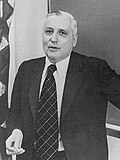
 Belgium
Explanation
When you mix hot and cold water, the temperature evens out. Yet in some chemical reactions, stripes appear or colors change again and again. Mr. Prigogine explained that such strange behavior happens in “open systems” that exchange energy with the surroundings. Thanks to him, we now know how nature can create its own patterns and rhythms.
Related Keywords
non-equilibrium thermodynamics
The branch of thermodynamics dealing with systems where energy or matter flows drive the system away from equilibrium. It describes irreversible processes produced by temperature gradients or chemical-potential differences and evaluates entropy production and transport coefficients. Prigogine extended the theory beyond the linear regime to a framework capable of explaining self-organization.
dissipative structure
A spatially or temporally ordered structure that forms in an open system exchanging energy or matter with its surroundings while dissipating energy. Examples include chemical oscillations, Bénard convection, and laser mode locking. Prigogine proposed it as a universal principle for the emergence of order in nature.
entropy production
The amount of entropy created by irreversible processes, representing the energetic “cost” of driving a system out of equilibrium. In the linear regime a minimum principle holds, but far-from-equilibrium nonlinear systems may stabilize at higher production rates. It is a key concept when discussing the stability of dissipative structures.
Belousov–Zhabotinsky reaction
An autocatalytic redox system in which the solution’s color oscillates periodically, serving as a quintessential chemical oscillator. It is widely studied as an experimental model of dissipative structures and is used to test the Oregonator mathematical model. The reaction launched extensive research into pattern formation and chemical chaos.
Brusselator
A simple reaction–diffusion model of two or three components proposed by Prigogine and co-workers. Depending on parameters it exhibits steady states, limit cycles, or spatial patterns, making it a textbook example of Hopf and Turing bifurcations. It serves as a prototype of minimal complexity in complex-systems theory.
self-organization
A process in which many interacting elements spontaneously produce an ordered structure or function without detailed external control. Dissipative-structure theory clarifies how energy dissipation drives this phenomenon. It is an essential concept across diverse fields such as biological evolution, urban traffic, and internet topology.
irreversible process
A thermodynamic process that cannot spontaneously reverse, such as friction, diffusion, or chemical reactions, and that increases entropy. Prigogine regarded irreversibility as a creative resource for generating macroscopic order, reframing the second law of thermodynamics as an active principle of “order through dissipation.”