1980 Nobel Prize in Chemistry(2)
Reason for Award
for their contributions concerning the determination of base sequences in nucleic acids
Laureates
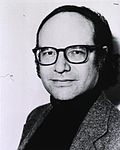
 United States of America

 United Kingdom of Great Britain and Northern Ireland
Explanation
DNA is built from four “letters” called adenine, thymine, guanine, and cytosine. Walter Gilbert and Frederick Sanger invented ways to read the order of these letters. Think of their tools as magnifying glasses that let us read a huge book one letter at a time. With them we can find out what plans living things have inside. Their ideas are the basis of today’s genome-reading technologies for people, animals, and plants. They handed us the key to unlock life’s secrets.
Related Keywords
dideoxy method
A chain-termination sequencing technique developed by Sanger. It exploits the property that incorporation of a ddNTP stops DNA synthesis. Reaction mixtures are divided into four, and fragments ending at each base are separated by electrophoresis to read the order. High sensitivity and compatibility with long DNA made it the standard method. Fluorescent labeling enabled automation and powered the Human Genome Project.
chemical cleavage method
A sequencing method established by Gilbert, chemically modifying specific bases and cleaving with piperidine. Radio-labeled DNA undergoes four reactions, each producing a base-specific pattern. Suited to short DNA and structural mapping, it fell out of favor due to toxic reagents and many steps. Nevertheless, it persists in niches such as methylation analysis. Its principles were also applied to footprinting studies.
automated sequencer
An instrument that uses fluorescently labeled ddNTPs with laser detection and capillary electrophoresis to output sequences continuously. It replaced manual film reading and enabled analysis of millions of bases per day. ABI Prism and similar machines powered the Human Genome Project. Coupled with software, they sped up error assessment and assembly. They formed the technological foundation immediately preceding NGS.
next-generation sequencing
A collective term for technologies that massively parallelize sequencing reactions to obtain huge amounts of data quickly. It can be viewed as an evolved form of Sanger-style polymerase reactions and fluorescence detection. It slashed genome-analysis costs and enabled personal genomic medicine and metagenomics. The data explosion greatly increased the importance of bioinformatics. NGS is the innovation that democratized sequencing.
genome analysis
A field that deciphers an organism’s entire genetic information to reveal structure, function, and evolution. Sequencing advances have decoded genomes of humans and many other species. It is vital for identifying disease genes and discovering new bio-materials. Improving sequencing accuracy and throughput is central to progress. Future development depends on database building and AI-driven analysis.