1988 Nobel Prize in Chemistry
Reason for Award
for the determination of the three-dimensional structure of a photosynthetic reaction centre
Laureates

 West Germany
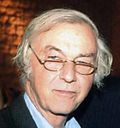
West Germany
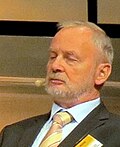
West Germany
Explanation
Plants make their own energy using light. The tiny spot that collects light and turns it into an electric-like power is called the “photosynthetic reaction centre.” Mr. Deisenhofer, Mr. Huber and Mr. Michel were the first to discover its three-dimensional shape. Knowing the shape is like having a map that shows how light travels and how energy moves. This helped scientists understand how plants and certain bacteria stay alive.
Related Keywords
photosynthetic reaction centre
A membrane-embedded protein complex that performs the very first conversion of light energy into electron energy. It tightly binds multiple pigments and proteins, enabling ultrafast electron hopping after photo-excitation. Two major classes exist—bacterial and plant; the laureates solved the bacterial type. Knowing the 3-D arrangement allows scientists to explain the direction and rate of electron flow at atomic detail. The discovery revolutionised photosynthesis research.
X-ray crystallography
A technique that illuminates a crystal with X-rays and computes atomic positions from the resulting diffraction pattern. It is one of the most common ways to visualise molecular 3-D structures. Membrane proteins are notoriously hard to crystallise, yet the laureates achieved it using detergents and other tricks. High-resolution structures guide functional studies and drug design. The method underpins modern structural biology.
membrane protein crystallization
The process of dissolving lipid-embedded proteins with detergents or liposomes and arranging them into an ordered crystal lattice. Conditions depend critically on pH, salt, temperature and lipid composition. Success with the reaction centre paved the way for later GPCR and ion-channel structures. High-throughput screens for crystallization conditions have since evolved. Although still technically demanding, pairing with cryo-EM now pushes resolutions even higher.
electron transfer
The process by which electrons move from a donor to an acceptor molecule during chemical or photochemical reactions. In the reaction centre, transfers occur on the picosecond scale, and directionality is set by spatial arrangement and redox potentials. Marcus theory is often applied to calculate rates. Efficient electron transfer lies at the heart of biological energy conversion and artificial photosynthesis technologies. Structural data provide concrete benchmarks for orbital overlap and charge distribution.
chlorophyll
A green pigment that readily absorbs light. It contains a porphyrin ring with a central magnesium atom and is anchored to membranes by a long phytyl tail. In the reaction centre, the “special pair” P960 is a stacked dimer of bacteriochlorophylls that triggers the first charge separation. Absorption wavelengths and redox potentials are finely tuned by the surrounding protein matrix. Chlorophyll is indispensable for the initial step of photosynthesis.
photo-energy conversion
The series of steps that convert light energy into chemical or electrical energy. In living organisms it leads to ATP and NADPH synthesis; in engineering it underlies solar cells and fuel generation. The reaction-centre structure is effectively a blueprint for a converter perfected by nature over three billion years. Researchers in artificial photosynthesis try to mimic its high efficiency and selectivity. Fundamental knowledge is accelerating the development of sustainable energy technologies.
diffraction data
The pattern of spots produced when X-rays scatter off a crystal. Each spot’s position and intensity encode inter-atomic spacings and electron density information. Solving the phase problem yields an electron density map into which atomic models can be built. High-quality diffraction data set the resolution and reliability of a structure. In the reaction-centre study they proved that even membrane proteins can reach high resolution.