1992 Nobel Prize in Chemistry
Reason for Award
for his contributions to the theory of electron transfer reactions in chemical systems
Laureates
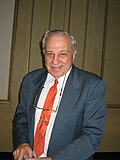
 United States of America,
  Canada
Explanation
Electricity flows because tiny particles called electrons move. In liquids, electrons can hop from one molecule to another, acting like a chemical switch. Rudolf Marcus invented a way to predict when this hopping is fast or slow. Just as a ball’s weight and the throwing distance matter, the shape of the molecules and the wiggles of the surrounding water decide how easily the electron moves. His ideas help us make better batteries and understand how plants use light to create energy.
Related Keywords
electron transfer reaction
A chemical reaction in which an electron moves from a donor molecule to an acceptor. It is the core of redox chemistry, governing batteries, photosynthesis and metal corrosion. The rate is controlled by electronic coupling, reorganization energy and reaction free energy. Marcus theory enables quantitative prediction of these rates. Experimentally, electron transfer is probed by electrochemical techniques and time-resolved spectroscopy.
Marcus theory
A kinetic model for electron-transfer reactions proposed by Rudolph Marcus. Combining a harmonic approximation of nuclear coordinates with Fermi’s golden rule, it yields an analytic activation free energy. It explains temperature effects, the inverted region and solvent influences, and is widely applied in chemistry, biology and materials science. Because inner- and outer-sphere reorganization energies are separable, the theory guides solvent and catalyst design. It was the central reason for the 1992 Nobel Prize in Chemistry.
reorganization energy
The energy required for molecules and the solvent to reorganize to their new equilibrium geometries before and after electron transfer. It has inner-sphere (bond stretching) and outer-sphere (solvent polarization) components. A lower value accelerates the reaction, while a higher value slows it. It can be estimated with dielectric-continuum models, molecular dynamics or back-calculated from temperature-dependent rates. Reorganization energy is a key design parameter for battery electrolytes and enzyme active sites.
activation free energy
The free-energy barrier that a chemical reaction must overcome. In Marcus theory it is given by \Delta G^{\ddagger}=\frac{(\Delta G^0+\lambda)^2}{4\lambda}. When -ΔG° exceeds λ, the barrier grows again, creating the “inverted region” where the rate decreases. It is measured via Arrhenius plots or laser spectroscopy. Lowering the activation free energy is the central goal of catalyst design.
outer-sphere electron transfer
A reaction in which donor and acceptor do not form a coordination bond, and the electron tunnels through the intervening solvent. Common in redox processes between metal complexes. The outer-sphere component dominates the reorganization energy, making the rate highly sensitive to solvent polarity and viscosity. Outer-sphere transfer is the textbook application of Marcus theory and is richly documented experimentally. It also matters for charge transfer at electrode surfaces and organic-semiconductor interfaces.
redox potential
The potential indicating how readily a substance gains (reduction) or loses (oxidation) electrons, measured relative to the standard hydrogen electrode. It directly determines ΔG° and thus the driving force of electron transfer. In the Marcus equation, increasing the magnitude of ΔG° changes the rate constant, but an overly negative value pushes the reaction into the inverted region and slows it. Designing optimal redox potentials is critical for batteries and bioenergetics.
inverted region
A region predicted by Marcus theory where the reaction rate decreases again when the free-energy change becomes highly negative. It is called “inverted” because the intuitive expectation of faster rates with larger driving force is reversed. Observed experimentally in photoinduced electron transfer in the 1980s, it validated Marcus’ model. The phenomenon shows that high driving force does not guarantee fast reactions, guiding catalyst and material development. Quantum effects and strong-coupling regimes can shift the inverted region’s position.