1993 Nobel Prize in Chemistry(2)
Reason for Award
for his fundamental contributions to the establishment of oligonucleotide-based, site-directed mutagenesis and its development for protein studies
Laureates
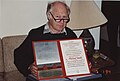
 Canada
Explanation
Imagine if we could change a single letter in the DNA instruction book of our bodies—what would happen? Dr. Michael Smith invented a way to change just one chosen spot in DNA. Scientists can now ask, “If this letter changes, how does the protein change?” much like changing one letter in a secret code alters its meaning. The method helps find disease causes and design new protein medicines. It was the first tool that let researchers truly “edit” DNA at will.
Related Keywords
site-directed mutagenesis
A technique that introduces designed mutations at specific DNA sites. Synthetic oligonucleotides enable substitution, insertion, or deletion of one or multiple bases. It is indispensable for protein function studies, enzyme redesign, and genetic-disease modeling. PCR and phage-vector methods are most common. CRISPR-coupled in cellulo editing is now widespread. The method drastically shortens the workflow from molecular design to functional validation.
oligonucleotide
A short single-stranded DNA or RNA molecule, typically tens of bases long. It can be chemically synthesized with any desired sequence. Used as primers, probes, siRNA, and antisense oligos among other roles. In mutagenesis, oligos containing mismatches replace target bases. Chemical modifications (phosphorothioate, PEG, etc.) improve stability and cellular delivery. Oligonucleotides are also being developed as therapeutics and diagnostics.
protein engineering
A discipline that modifies protein amino-acid sequences to enhance function or stability. Site-directed mutagenesis is a core tool for analyzing structure–function relationships and optimizing enzymes. Rational design and directed evolution are the two main strategies, employing computational chemistry and random mutagenesis-screening cycles, respectively. Applications span therapeutics, industrial catalysis, and biosensing. AI now assists sequence prediction, accelerating design cycles.
QuikChange PCR
A PCR-based mutagenesis method that amplifies circular DNA with bidirectional primers and removes methylated template using DpnI. It is a simple one-tube reaction with high efficiency. High-fidelity polymerase and well-designed long primers are critical for success. Variants allow multi-site mutations or insertion additions. Commercial kits have popularized the approach. Algorithms for competitive primer design are being developed to minimize background.
directed evolution
A methodology that combines random or semi-random gene diversification with screening/selection to obtain proteins with desired functions. Site-directed mutagenesis serves for local library exploration, optimizing evolutionary speed. Highlighted by the 2018 Nobel Prize in Chemistry (Frances Arnold). Achievements include enzyme thermostabilization, altered substrate specificity, and light-controlled reactions. Integration with AI and automation is pushing toward ultra-high-throughput evolution.
CRISPR-HDR
A method that employs CRISPR-Cas to cut DNA and homology-directed repair (HDR) to insert foreign sequences or point mutations. Using single-stranded oligodeoxynucleotides (ssODN) as donors enables high-efficiency precision edits. Cell-cycle dependence and p53 activation remain challenges. Chemically modified oligos and small-molecule HDR enhancers improve efficiency. It represents the next generation for in vivo site-directed mutagenesis.