1995 Nobel Prize in Chemistry
Reason for Award
for their work in atmospheric chemistry, particularly concerning the formation and decomposition of ozone
Laureates
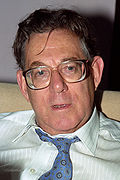
 Netherlands

 United States of America
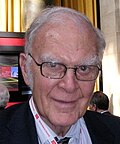
United States of America
Explanation
Around Earth there is a protective blanket called the ozone layer that blocks harmful ultraviolet light. Scientists found that gases once used in spray cans and refrigerators were damaging this blanket. Paul Crutzen, Mario Molina and Sherwood Rowland studied how this damage happens and told the world. Thanks to them we learned how important the ozone layer is. Today people all over the world work together to reduce the gases that harm it.
Related Keywords
ozone layer
A layer of elevated O3 concentration located roughly 15–35 km above Earth in the stratosphere that absorbs solar UV-B radiation and protects surface life. Its abundance is expressed in Dobson units and varies with season and latitude. Dramatic thinning over Antarctica in the late 1970s led to the term “ozone hole.” Because ozone integrity is tightly linked to climate, ecosystems and human health, a global monitoring network has been established. Although recent trends show recovery, interactions with greenhouse gases must be incorporated into future projections.
chlorofluorocarbons (CFCs)
Synthetic compounds composed of carbon, fluorine and chlorine, once widely used as refrigerants, foaming agents and aerosol propellants. They are chemically inert in the troposphere but photolyze in the stratosphere to release chlorine radicals that destroy ozone. With atmospheric lifetimes of several decades to a century, they become nearly uniformly mixed globally. The Montreal Protocol mandated phased elimination, leading to substitutes such as HCFCs, HFCs and natural refrigerants. Some substitutes have high global-warming potentials, so development of better alternatives remains an environmental priority.
chlorine radical (Cl•)
A highly reactive chlorine atom with an unpaired electron produced by photolysis or isomerization of CFCs and ClONO2. Cl• reacts rapidly with O3 to form ClO, which then reacts with O or with another ClO to regenerate Cl•, forming a catalytic cycle. A single Cl• can destroy hundreds of thousands of ozone molecules. In polar regions, heterogeneous reactions on PSC surfaces activate chlorine; sunlight returning in spring releases large amounts of Cl• and drives ozone-hole formation. Observations now show gradual declines in ClO column amounts as total chlorine loading decreases.
stratosphere
The atmospheric layer above the troposphere extending roughly 10–50 km, characterized by a temperature inversion with height due to ozone photochemistry. Ozone absorption of UV heats the upper stratosphere, influencing its thermal structure. The Brewer–Dobson circulation dominates, controlling vertical and latitudinal transport of trace gases. Greenhouse gases and volcanic aerosols perturb stratospheric temperature and composition, feeding back on ozone recovery. Because it affects aviation, satellite design and climate, the stratosphere is a major focus of interdisciplinary research.
ozone hole
A region of extreme depletion in total ozone column, observed mainly over Antarctica during spring and first reported in 1985 by the British Antarctic Survey. Polar stratospheric clouds formed during the polar night convert reservoir species such as ClONO2 and HCl into active chlorine, triggering rapid ozone loss after sunrise. Enhanced UV levels under the hole raise risks of skin cancer and eye disease, so ground (Dobson, Brewer) and satellite (TOMS, OMI) systems continuously monitor it. Data show gradual shrinkage in depth and area as CFC restrictions take effect, although very cold years can yield temporary re-expansion. Similar large-scale depletion can occur in the Arctic when meteorological conditions align.
photochemical reaction
A process in which molecular absorption of light (mainly UV) leads to excited states and subsequent chemical reactions. Examples in the atmosphere include O2 → O + O and CFC → Cl + radicals, which drive the stratospheric ozone production-destruction cycles. Reactions are wavelength dependent; absorption cross-sections and quantum yields are key parameters. Satellite remote sensing exploits this dependence to retrieve vertical distributions of ozone and aerosols. Photochemical mechanisms are also critical for urban smog formation and radiative-climate assessments, making them indispensable in environmental analyses.
Montreal Protocol
An international environmental treaty adopted in 1987 that mandates phased reduction and elimination of ozone-depleting substances (ODS). Parties agreed to scheduled cuts in production and consumption of CFCs, halons, carbon tetrachloride and others; successive amendments broadened substance coverage and tightened controls. Compliance has been high, and UNEP regards it as one of the most successful environmental agreements. Atmospheric chlorine and bromine loading has begun to decline, and the ozone layer is expected to return to 1980 levels by mid-21st century. The 2016 Kigali Amendment added high-GWP HFCs to address climate forcing.