2001 Nobel Prize in Chemistry(2)
Reason for Award
for research on chirally catalysed oxidation reactions
Laureates
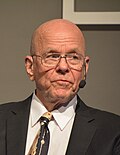
 United States of America
Explanation
The smells of lemon and orange come from molecules that differ only in being right-handed or left-handed. Barry Sharpless discovered a almost magical way to add oxygen to molecules—an "oxidation" reaction—while making only the desired hand. A special catalyst does the hard work: a small amount can transform huge numbers of molecules. The products are used to build heart medicines and insecticides. Thanks to Sharpless, many everyday chemicals can now be produced more safely and efficiently.
Related Keywords
Sharpless asymmetric epoxidation
Sharpless asymmetric epoxidation selectively oxidizes allylic alcohols to chiral epoxides using Ti(OiPr)₄ and tartrate esters. The reaction proceeds at room temperature, routinely affording ee values close to 99 %, making it a staple in synthetic chemistry. The resulting epoxides undergo nucleophilic ring openings to introduce diverse functionalities, serving as pivotal intermediates in drug and natural-product synthesis. Mild conditions and easy scale-up facilitate industrial adoption. SAE remains one of the most cited and successful asymmetric oxidation methods to date.
titanium–tartrate catalyst
The titanium–tartrate complex is a chiral catalyst formed from Ti(IV) and naturally sourced tartrate esters; its C₂ symmetry enforces facially selective oxygen transfer. Cooperative action of the metal center and organic ligand generates an active oxygen species while simultaneously locking the substrate in place, yielding high efficiency. Tartrate is inexpensive and biodegradable, showcasing environmentally benign catalyst design. Catalyst loadings are typically 1–10 mol %, and recycling protocols have been explored. This design principle has inspired numerous other transition-metal-based asymmetric oxidation catalysts.
allylic alcohol
An allylic alcohol is an alkene bearing an –OH group adjacent to the double bond, serving as the primary substrate in asymmetric epoxidation. Resonance makes it more oxidizable, and the resulting epoxide can be transformed into many other functional groups. In the Sharpless method, the substrate chelates to Ti, yielding a rigid transition state that delivers high ee. Allylic alcohols are widely used as synthetic intermediates and fragrance precursors, and their reactivity can be tuned readily. Ongoing studies explore protecting groups and steric modifications to further enhance selectivity.
enantioselective oxidation
Enantioselective oxidation preferentially forms one enantiomer during an oxidation step and has historically been more challenging than reductive counterparts. Success relies on steering the active oxygen species stereochemically through metal–ligand architecture. Sharpless’ suite of reactions (SAE, AD, AA) provided landmark breakthroughs in this field. Highly selective oxidations reduce downstream protection and separation, cutting process costs and environmental impact. Organic small-molecule catalysts and enzymes are now expanding the toolbox, offering even more options.
β-blocker synthesis
β-Blockers for cardiovascular therapy contain a propanol substructure that is efficiently formed by opening a chiral epoxide. SAE provides this epoxide in high purity, eliminating costly racemate separation and improving process economics. A prime example is (S)-propranolol, synthesized via nucleophilic ring opening of the epoxide with isopropanolamine. Mild reaction conditions minimize by-products, simplifying quality control for pharmaceutical standards. The global demand for β-blockers underscores the significant industrial impact of SAE.