2013 Nobel Prize in Chemistry
Reason for Award
for the development of multiscale models for complex chemical systems
Laureates
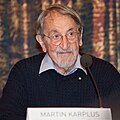
 United States of America,
  Austria
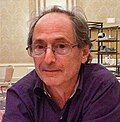
United States of America,  United Kingdom of Great Britain and Northern Ireland,
  Israel

United States of America, Israel
Explanation
Chemical reactions happen when tiny atoms and electrons move, but we cannot see them. Mr. Karplus, Mr. Levitt, and Mr. Warshel invented a way to recreate this hidden world inside a computer. The hard part is to look at huge molecules quickly while also watching each electron carefully. They made rules that let the computer look “roughly” at the easy parts and “very closely” at the important parts at the same time. Thanks to their idea, making new medicines and energy materials on a computer became much easier.
Related Keywords
multiscale model
A computational strategy that decomposes an atomic or molecular system into several spatial or temporal scales and applies the most suitable physics to each. A typical setup treats the reaction center with quantum mechanics, the surroundings with molecular mechanics, and distant solvent as a dielectric continuum. By retaining accuracy while reducing cost, multiscale models have found wide application in biomolecules and materials science. The QM/MM variant has become the de-facto standard for enzyme mechanism analysis and catalyst design and is implemented in many commercial packages.
QM/MM method
QM/MM divides a molecule into two regions: the part requiring electronic detail is treated with quantum chemistry, and the rest with classical molecular mechanics. Link atoms or localized orbitals handle boundaries, ensuring smooth total energy. Since the 1980s a variety of QM levels, from semi-empirical Hamiltonians to density-functional theory, have become selectable. More recently, the integration of polarizable force fields and machine-learning potentials has further boosted accuracy.
molecular dynamics simulation
A numerical integration of Newton’s equations to propagate atomic positions and velocities over time. Coupled with QM/MM it can track structural changes during reactions and map free-energy landscapes including thermal fluctuations. Temperature control algorithms and fast treatment of long-range Coulomb interactions are essential, and modern implementations are GPU-accelerated.
enzyme reaction mechanism
The sequence of microscopic steps by which an enzyme converts substrates. QM/MM enables atomic-level analysis of charge transfer in the active site, proton shuttles, and the role of water molecules. The resulting pathways guide inhibitor design and prediction of mutation effects.
potential energy surface
A multidimensional function mapping the system’s energy as a function of nuclear coordinates; it acts as a map for reaction pathways and transition states. Because QM/MM can efficiently compute highly accurate local PES segments, it allows quantitative prediction of activation energies and product distributions. It is often combined with topology analysis and reaction-path following algorithms.