2016 Nobel Prize in Chemistry
Reason for Award
for the design and synthesis of molecular machines
Laureates

 France
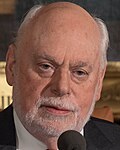
 United Kingdom of Great Britain and Northern Ireland,
  United States of America

 Netherlands
Explanation
Just like building a robot with LEGO bricks, scientists built machines using much smaller parts—molecules. In a world thousands of times thinner than a hair, they connected ring-shaped and rod-shaped molecules so that they could move. The rings slide along the rods or spin like tiny propellers. These motions start when we shine light or add heat. Although invisible to our eyes, such tiny machines may one day carry medicines inside the body or store electricity.
Related Keywords
molecular machine
A molecular machine is an assembly of molecules that performs a predetermined motion upon energy input. Typical motions include ring rotation, position shuttling, and axle elongation. Like biological F-ATPase, it operates out of equilibrium to do work. Artificial versions can be powered by light, electricity, or chemical fuels. Their nanometer size promises applications in medicine and nanoelectronics.
catenane
Catenanes consist of interlocked macrocyclic rings and exemplify mechanical bonding. Sauvage achieved high-yield synthesis using a Cu(I) template. The rotational freedom of the rings enables switches and motors. By varying ring size and composition, photo-responsive or redox-responsive functions can be installed. Integration into polymers and materials is under study for stress-responsive gels and related applications.
rotaxane
A rotaxane features a ring threaded onto an axle whose ends are blocked by bulky stoppers. Stoddart used donor–acceptor interactions to self-assemble such structures and control ring position. Shuttling can be switched rapidly by pH changes or applied voltage, creating molecular switches. Combining multiple rotaxanes allows logic gates and memory elements. Biocompatible rotaxanes are now explored as drug-delivery carriers.
molecular motor
A molecular motor performs unidirectional rotation or linear motion and is capable of continuous work. Feringa’s light-driven motor combines photo-isomerization with thermal relaxation, reaching >12 MHz rotation. Arrays of such motors on surfaces can translate nanoscale motion into macroscopic twisting. Applications include nanocars and liquid-crystal actuators. Development of chemically or electrically powered variants is accelerating.
mechanical bond
A mechanical bond arises when molecules are physically interlocked rather than connected by electron sharing. Catenanes and rotaxanes are prime examples, where topology confers chemical stability. Mechanical bonding enables movable parts within a molecule, providing dynamic functions unattainable with purely covalent frameworks. Template-directed self-assembly and click chemistry afford diverse structures in good yield. Because no covalent change is needed to move components, stimulus responsiveness is easily built in, benefiting molecular switches and soft materials.
supramolecular chemistry
Supramolecular chemistry studies self-assembly and function based on intermolecular interactions. Hydrogen bonding, π-stacking, and metal coordination are used to build complex aggregates. Molecular machines are understood within this framework, with reversible motion under external stimuli as a key theme. Applications extend to drug delivery, sensing, and energy conversion. The Nobel-awarded work demonstrated that supramolecular chemistry can evolve into dynamic, mechanically functional systems.