1911 Nobel Prize in Literature
Reason for Award
in appreciation of his many-sided literary activities, and especially of his dramatic works, which are distinguished by a wealth of imagination and by a poetic fancy, which reveals, sometimes in the guise of a fairy tale, a deep inspiration, while in a mysterious way they appeal to the readers' own feelings and stimulate their imaginations
Laureates
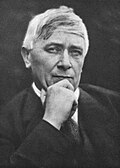
 Belgium
Explanation
Maurice Maeterlinck was a storyteller born in Belgium. He wrote plays and tales that speak gently to people’s hearts. His most famous story is “The Blue Bird,” which tells of children searching for happiness. Fairies and animals often appear, leading readers into a dream-like world. You don’t need difficult words, only your imagination, to enjoy his works. Because he created many such wonderful stories, he received the Nobel Prize in Literature.
Related Keywords
Symbolism
An artistic movement of the late 19th century that expresses emotion through symbols and suggestion rather than direct realism. Maeterlinck’s plays are regarded as a leading theatrical embodiment of this trend.
The Blue Bird
A children’s play premiered in 1908 in which Tyltyl and Mytyl search for a blue bird symbolizing happiness; its meta-theatrical design invites the audience to undertake an inner quest.
Pelléas and Mélisande
A 1893 play that expresses fate and the subconscious through images of water and darkness; it became the basis for Debussy’s opera and stands as a monument of symbolist theatre.
Drama of silence
A hallmark of Maeterlinck’s work in which pauses and silences carry emotional weight and meaning, profoundly influencing later theatre of the absurd.
Belgian literature
The literary tradition arising from Belgium’s Dutch- and French-speaking communities. Writing in French, Maeterlinck was among the first Belgian authors to gain wide international acclaim.
Fairy-tale motif
Maeterlinck often introduced fairies and animals, using a fairy-tale frame to explore philosophical themes, thereby appealing to readers of all ages.
Imagination
A key word in the Nobel citation; his works stimulate the reader’s imagination and make visible, within theatrical space, emotions and ideas that resist direct expression.
Nature essays
Essays such as “The Life of the Bee” observe animal societies and derive lessons for humanity, notable for blending scientific insight with literary lyricism.
Psychological theatre
A form of drama that emphasizes inner emotions and the unconscious over outward action; influenced by symbolism and Maeterlinck, it became a major current in 20th-century theatre.
Debussy adaptation
Composer Claude Debussy adapted “Pelléas et Mélisande” into an opera, fusing symbolist literature with modern music and demonstrating the permeability between stage arts.