1917 Nobel Prize in Literature(1)
Reason for Award
for his varied and rich poetry, which is inspired by lofty ideals
Laureates
 Denmark
Explanation
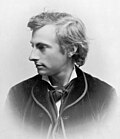
Karl Gjellerup was a Danish writer who created many stories and poems. His poems speak gently about courage, kindness, and other feelings we all value. They show how wonderful it is to keep lofty dreams and ideals, and reading them warms our hearts. The Nobel Prize in Literature honored him for sharing such touching poetry with the world. By reading his works, we can learn the importance of caring for others and having big dreams.
Related Keywords
Idealism
A philosophical stance underlying Gjellerup’s later poetry. It holds that humans should seek spiritual values beyond material desire. Influences from Plato and Kant are visible, and art is assigned the task of moral elevation. Idealism aligns with the Symbolist movement of the late 19th century, using abstract imagery to convey universal values. Keeping this lens in mind clarifies the function of metaphysical metaphors in his work.
Epic poetry
A long narrative poetic form. Gjellerup used classical hexameter in works like "Minna" to build a grand tale centered on love and redemption. Epic poetry highlights not only heroic deeds but also the protagonists’ spiritual growth. By introducing multi-layered narration and choral passages, he intertwines timelines and viewpoints. Readers thus experience both external adventure and internal quest simultaneously.
Eastern philosophy
Gjellerup incorporated Buddhist and Hindu ideas—especially reincarnation and karma—into his literature. This enabled him to depict life not as a single linear span but as cyclical time. From a cross-cultural viewpoint, his work shows Danish literature’s early openness to Asian thought. The interpretive shifts that occur during cultural translation add an extra layer of textual interest. Readers should distinguish original doctrinal meanings from the author’s creative re-interpretations.
Danish literature
The body of literary works written in the Danish language and cultural context. In the late 19th century it saw a surge in social critique and experimental forms, producing internationally active writers like Gjellerup and Pontoppidan. Despite a small linguistic sphere, Danish literature influenced Europe through extensive translation. Key themes include the legacy of the Reformation and transformations of rural communities. Nobel recognition signals the worldwide acknowledgement of its unique yet universal qualities.
Pilgrimage motif
A central theme in "Der Pilger Kamanita." The protagonist’s physical and spiritual journey toward enlightenment serves as a metaphor for religious growth and life itself. It invites comparison with European medieval pilgrimage literature and Buddhist quest narratives. Showing interaction between the travelling body and a transforming inner self, it forms a prototype for modern identity quests. Seen as a structural principle, the motif clarifies the symbolic function of scene shifts throughout the work.