1917 Nobel Prize in Literature(2)
Reason for Award
for his authentic descriptions of present-day life in Denmark
Laureates
 Denmark
Explanation
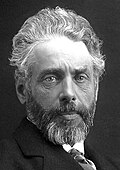
Henrik Pontoppidan wrote stories about the everyday lives of people in Denmark. He described families, farms, and towns so vividly that readers feel they are watching real events. His characters’ joys and sorrows become our own, and this realism earned him the Nobel Prize in Literature. By reading his stories we can feel close to people living in a distant country.
Related Keywords
Realism
A literary stance aiming to depict society without distortion. Pontoppidan recorded rural life and urban poverty in meticulous detail, forcing readers to confront social problems. His narratives avoid sentimentality and seek universal truth through accumulation of observable facts. Realism, dominant in late 19th-century Europe, intersected with political democratization and the Industrial Revolution. Studying Pontoppidan shows how realism related to social change.
Social critique
The act of questioning political, economic, and religious systems through narrative. In "Lucky Per" class hierarchy and the downsides of capitalism are repeatedly problematized. Devices such as irony and conflict structures challenge readers’ value systems. Unlike journalism, literary social critique visualizes institutional impact through inner lives of characters. This significance was central to the Nobel Committee’s evaluation.
Lucky Per
Published 1904–1905, this long novel is Pontoppidan’s masterpiece. The protagonist Per dreams of success through a grand canal project while courting a wealthy Jewish heiress, yet faces contradictions between self and society. Borrowing the form of a Bildungsroman, it portrays the failure of modern projects and a personal turn inward. Scholars study it as a complex text where Danish religiosity, technological optimism, and nationalism intersect. It is considered a pinnacle of 20th-century Danish literature and has been widely translated.
Danish rural life
A major setting of Pontoppidan’s early works. He details peasant communities, land inheritance issues, and religious traditions. Rural conflicts amid urbanization and industrialization act as a microcosm of Danish society. Realist depictions of landscape and dialect heighten immediacy, letting readers grasp social change concretely. The material is valuable even for cultural anthropology.
Modernization
Rapid changes in technology, politics, and values from the late 19th century onward. Pontoppidan’s works feature expanding railways, parliamentary democracy, and educational reforms as background. Individuals gain new opportunities yet suffer alienation from tradition. By showing both benefits and drawbacks, the author criticizes simplistic notions of progress. The concept is useful for comparing similar processes experienced by small European nations.