1919 Nobel Prize in Literature
Reason for Award
in special appreciation of his epic, 'Olympian Spring'
Laureates
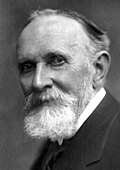
 Switzerland
Explanation
This prize honors the Swiss writer Carl Spitteler for his long narrative poem “Olympian Spring.” The story imagines the gods of Greek mythology visiting the modern world, a curious and exciting idea. Although it is poetry, it is told like an adventure story, so readers can follow the gods’ feelings and actions easily. Spitteler was famous for describing nature and human emotions in beautiful, vivid words. The Nobel Prize in Literature is given to authors whose books or poems are considered the best in the world. The 1919 prize was actually handed over one year later, but it still carries the year 1919. “Olympian Spring” mixes humor that children can enjoy with deeper thoughts about life. That is why it was chosen as a work that shows many people how fun literature can be.
Related Keywords
epic poetry
Epic poetry is a lengthy poetic form that tells heroic stories or national histories. Homer’s Iliad and Odyssey are classical examples from ancient Greece. It combines narrative and poetic devices, using metre and repeated phrases suitable for oral recitation. After the rise of the novel, modern epics became experimental challenges rather than mainstream literature. Spitteler’s “Olympian Spring” is one of the few long epics written in modern German. Its innovation lies in combining free verse with contemporary themes, expanding the boundaries of traditional epic.
'Olympian Spring'
“Olympian Spring” was published in four volumes between 1900 and 1905. Its bold premise brings the gods of Greek mythology into modern society. Written in free verse, it alternates prose-like rhythms with dense poetic imagery. Through dialogues between gods and humans, it probes conflicts between progress and tradition, individual and community. Initially deemed difficult, it was re-evaluated after World War I for its universalist message. Winning the Nobel Prize drew international attention, and the poem remains a key text in comparative literature and translation studies.
Symbolism
Symbolism began in late-19th-century France and sought to express inner worlds through sound and image. Instead of depicting reality directly, it uses symbolic motifs to convey emotions and ideas. Spitteler adopted Symbolist techniques, treating the gods as symbols of human psychology. Ambiguous metaphors and polysemous diction multiply interpretive layers for the reader. Symbolism laid the groundwork for Expressionism and literary Modernism, fostering stylistic innovation in the 20th century. “Olympian Spring” stands within this movement, creating a unique poetic universe that blends myth and symbol.
Swiss literature
Swiss literature has developed within a multilingual environment of German, French, Italian, and Romansh. This diversity makes it difficult to define a single national canon. In the German-speaking tradition authors such as Gottfried Keller and Max Frisch are central, but Spitteler carved out a niche with his unusual epic form. Swiss writing often engages motifs like alpine landscapes, visual arts, and direct democracy. Switzerland’s role as a neutral, cross-border nation also grants its literature a universalist outlook. “Olympian Spring” exemplifies an internationally oriented work born from this multilingual culture.
classical mythology
Classical mythology refers to the body of Greek and Roman tales about gods and heroes. It forms a foundation for Western literature and art, frequently reused as symbolic material. Spitteler converts myth into a satirical tool by letting Zeus and Apollo step into modern society. Mythic structures give readers a familiar narrative scaffold, making complex themes more accessible. Nietzsche’s Birth of Tragedy and other fin-de-siècle works stimulated a renewed interest in myth, linking it to Symbolism. “Olympian Spring” thus turns classical mythology into a laboratory for modern intellectual history.
Nobel Prize in Literature
The Nobel Prize in Literature was established in 1901 according to Alfred Nobel’s will. It is awarded annually to authors who have made outstanding contributions to world literature. The Swedish Academy administers the selection, encompassing a wide spectrum of languages and cultures. In 1919, no award was made because of post-war considerations, but under the statutes the prize was reserved and given to Spitteler the following year. Winning boosts international recognition of an author’s work, stimulating translations and scholarly attention. The prize often sparks public debate, and transparency of the selection process has become an issue in recent years.
pacifism
Pacifism is the belief that disputes should be resolved by peaceful means, rejecting war and violence. After World War I, many European writers voiced pacifist ideals. Spitteler’s 1914 speech defended Swiss neutrality while criticizing pro-German sentiment. This stance resonates with the universalist message of “Olympian Spring.” His Nobel award is often seen as contributing to a post-war spirit of reconciliation. The link between literature and pacifism aligns well with the ethos of the Nobel Prizes.
multiculturalism
Multiculturalism refers to a social model in which multiple cultures coexist and respect each other. Switzerland, with its four official languages, naturally embodies such an environment. Spitteler’s work contains quotations from several languages and adopts transnational perspectives, displaying a strong multicultural flavor. The premise of gods crossing borders in “Olympian Spring” symbolizes intercultural dialogue. Multiculturalism is now a key value in global society, shedding new light on the study of the poem. The Nobel award highlighted the literary distinctiveness of multicultural Switzerland on the world stage.