1922 Nobel Prize in Literature
Reason for Award
for the happy manner in which he has continued the illustrious traditions of the Spanish drama
Laureates
 Spain
Spain
Explanation
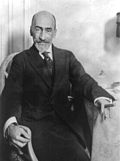
Jacinto Benavente was a Spanish writer who created many plays for the stage. He turned difficult history and social themes into easy-to-follow conversations so that children and adults could enjoy them. Spain has loved theater for centuries, and Benavente kept that old tradition alive while adding fresh new ideas. His characters speak like lively classmates, making the audience laugh and think at the same time. Thanks to him, people came to love Spanish culture and language even more. The Nobel Prize in Literature honored him for this wonderful style.
Related Keywords
Spanish drama
Spanish drama is a stage tradition formed during the 16th–17th-century Golden Age by writers such as Cervantes and Calderón. It spans religious autos, court comedies, and open-air popular plays. In the 19th century Romanticism and Realism intersected, producing works that tackled social issues. In the early 20th century Benavente, aware of this legacy, introduced a new focus on urban life and psychological nuance. His success led to an international reassessment of Spanish drama and influenced later playwrights like Lorca and Buero Vallejo.
Realist theatre
Realist theatre, established in late-19th-century France and Russia, aimed to reproduce ordinary life on stage. Benavente brought this trend into the Spanish-speaking world, emphasizing unexaggerated dialogue and fine-grained psychological portrayal. His plays simplify scenery so that the driving force is the characters’ words—and silences. Audiences are urged to judge the protagonists’ choices and contradictions themselves, turning theatre into a mirror of society. This approach was later inherited by modernist theatre and film screenwriting.
'Los intereses creados'
'Los intereses creados' (1907) is Benavente’s best-known play, often translated as 'The Bonds of Interest.' The plot unfolds in a puppet-show-like form that wittily satirizes human desire and deceit. The swindler protagonists wear metaphorical masks, manipulating others while hiding their true motives. By the end, the boundary between fiction and reality blurs, forcing the audience to question morality and self-interest. The play’s international productions cemented Benavente’s reputation.
Generation of '98
The 'Generation of '98' refers to Spanish intellectuals who emerged after the 1898 Spanish-American War and Spain’s colonial losses. Writers like Unamuno and Azorín sought national regeneration through literature and philosophy. Broadly associated with this current, playwright Benavente projected social critique and national self-reflection onto the stage. The group reevaluated Castilian landscapes and popular speech as literary resources, aiming to rebuild Spanish identity. Their concerns shaped 20th-century Spanish culture and continued to influence post-Civil-War literature.
Social satire
Social satire is a literary and theatrical device that attacks power, customs, and prejudice through humor and exaggeration. Benavente satirized upper-class hypocrisy and commercialism, urging audiences to view these flaws as their own. Ethical questions lie beneath the laughter, allowing entertainment and edification to coexist. His satire avoids brutality; wit and humor stimulate dialogue, making it accessible to diverse viewers. This gentle critical spirit resonates in today’s comedy dramas and satirical cartoons.