1923 Nobel Prize in Literature
Reason for Award
for his always inspired poetry, which in a highly artistic form gives expression to the spirit of a whole nation
Laureates
 Ireland
Explanation
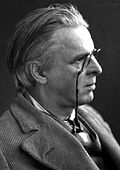
William Butler Yeats was a poet who used the stories and language of Ireland to write beautiful poems. His works cherish village tales, fairies, and legends that many people know. When you read them, you can almost feel the Irish wind or smell the grass. These poems encouraged many hearts, so Yeats received the Nobel Prize. From him we can learn how important it is to describe the good things about our own country and town in words.
Related Keywords
Irish Literary Revival
A movement from the late 19th to early 20th century aimed at revaluating Irish language, lore, and arts to create an autonomous culture. Led by Yeats, Lady Gregory, and J. M. Synge, it infused poetry and drama with Celtic myths and rural life. The revival underpinned political aspirations for independence and influenced the eventual formation of the Irish Free State.
Symbolism
A literary current originating in late-19th-century France that evokes emotion through symbols and suggestion rather than direct realism. Influenced by Mallarmé and Verlaine, Yeats used abstract imagery and musical metrics to express spirituality. This allowed him to convey political messages and mystical ambiance simultaneously, forging a distinctive poetic style.
Celtic mythology
A body of stories about gods and heroes handed down in Ireland, Scotland, and other Celtic regions. Yeats used Celtic legends in works like The Wanderings of Oisin, linking antiquity with the modern era. The rich symbolic system also reinforced Irish identity.
Abbey Theatre
The national theatre founded in Dublin in 1904 by Yeats, Lady Gregory, and others. It staged plays based on Irish history and folklore, serving as a hub for raising social awareness through literature and performing arts. The Abbey remains central to Irish theatre today.
The Second Coming
A famous 1920 poem that prophetically depicts turmoil and a turning point of civilisation after World War I. The line “Things fall apart; the centre cannot hold” is one of the most quoted in 20th-century literature. The poem symbolically employs the spiral gyre central to Yeats’s philosophy of history.