1925 Nobel Prize in Literature
Reason for Award
for his work which is marked by both idealism and humanity, its stimulating satire often being infused with a singular poetic beauty
Laureates
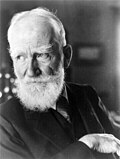
 United Kingdom of Great Britain and Northern Ireland,
  Ireland
Explanation
George Bernard Shaw was a writer who made people think about important things through stories. His works make readers laugh at funny moments, yet they hide hints on how everyone can live happily. For example, he asks us to look again at rules grown-ups think are normal, but from a child’s fresh viewpoint. The characters often argue, yet deep inside they care about one another. That is why, after laughing, your heart feels warm. Through his books, Shaw gently says, “Let’s all live together kindly and fairly.”
Related Keywords
satire
A literary technique that exposes social contradictions and the flaws of those in power through humor, prompting readers to think critically; Shaw refined it with witty dialogue.
idealism
A mindset that acts upon belief in a better society; Shaw’s plays blend social criticism with the pursuit of lofty ideals without contradiction.
humanism
A stance that centers on human dignity and well-being; Shaw depicted both the weaknesses and potentials of his characters, advocating humanistic values through empathy.
social criticism
The act of scrutinizing institutions and customs through art, indicating the need for reform; poverty, gender, and class form central themes in Shaw’s works.
dialogue play
A dramatic form in which character dialogues advance not only the plot but also structured argument; Shaw used it to draw the audience into debate.
Fabian Society
A British intellectual group advocating gradual socialism; Shaw, as a member, took part in its policy proposals and incorporated its ideas into his dramas.