1927 Nobel Prize in Literature
Reason for Award
in recognition of his rich and vitalizing ideas and the brilliant skill with which they have been presented
Laureates
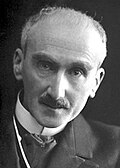
 France
Explanation
Henri Bergson was a French thinker who used books to explain the wonder of “time” and “life” in a fun way. He said there is not only the time of the clock, but also a stretchy time that we feel inside. For example, recess seems to end quickly while a boring class feels very long. Bergson told us to value that inner time. He also believed life has a forward-pushing force, which he called the “élan vital.” Because he shared these unique ideas in beautiful words, he received the Nobel Prize in Literature.
Related Keywords
élan vital
1. A concept Bergson introduced to describe the creative inner drive propelling biological evolution. 2. It stands for a principle of motion possessing novelty and directionality beyond purely physico-chemical laws. 3. By invoking it, Bergson sought to transcend the mechanist/teleologist dichotomy and emphasize life’s own spontaneity. 4. Later critics equated it with vitalism, but process philosophy and complexity theory have rekindled interest. 5. In the history of biology, it symbolizes the early-twentieth-century revival of vitalism and new dynamism.
durée
1. Bergson’s key notion for the qualitative continuity of psychic time. 2. Unlike homogeneous, spatialized time suitable for measurement, durée flows with the past melting into the present. 3. Within this continuum, moments cannot be sliced and free will can operate. 4. It inspired literary “stream of consciousness” techniques and film theory, later elaborated by Gilles Deleuze. 5. Contemporary studies of temporal experience cite it when examining the divergence between neuronal and subjective time.
intuition
1. A Bergsonian mode of knowing that “dives” into the object to grasp it from within. 2. Whereas analytic intellect divides and represents from outside, intuition apprehends the continuous real without partition. 3. The distinction served as a framework for envisaging cooperation between scientific and philosophical knowledge. 4. It influenced phenomenology’s “return to the things themselves” and immersive approaches in aesthetics. 5. Current cognitive science debates about the value of first-person data often reference this idea.
creative evolution
1. Bergson’s 1907 book portraying biological evolution as an act of creation. 2. While not denying natural selection, it highlights qualitative leaps inexplicable by random aggregation alone. 3. He interpreted morphological branching not as a sequence in time but as diverging movements. 4. The book, a bestseller at the intersection of philosophy, biology, and literature, influenced writers such as Virginia Woolf. 5. It is being revisited in dialogue with twenty-first-century evo-devo and self-organization theories.
stream of consciousness
1. A literary technique that portrays the continuous chain of inner thoughts and sensations. 2. Bergson’s concept of durée provided a theoretical foundation, influencing authors such as James Joyce and Marcel Proust. 3. By exploiting matches and mismatches between story time and narrative time, it conveys subjective experience vividly. 4. The idea has been applied to long takes and jump-cut theory in film as a means of manipulating time perception. 5. In cognitive literary studies it serves as a clue to investigate links between reader empathy and brain activity patterns.
time and free will
1. Bergson’s early work that clarifies the distinction between physical and psychological time. 2. He criticized quantitative models of time for leading to a denial of free will and asserted the reality of choice within qualitative time. 3. The book challenged prevailing determinism and the emerging “new psychology.” 4. It influenced reexaminations of responsibility concepts in law and education. 5. In current neuro-determinism debates it remains a touchstone for arguments concerning subjective intention.