1938 Nobel Prize in Literature
Reason for Award
for her rich and truly epic descriptions of peasant life in China and for her biographical masterpieces
Laureates
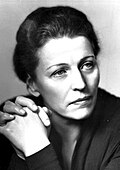
 United States of America
Explanation
Pearl S. Buck was a writer who told stories about farmers’ lives in far-away China. Her characters plough fields, help their families, and face each season with courage. When we read her books, it feels as if we are standing in the rice paddies ourselves. She gently teaches us about the importance of family and friendship. Because of this, people everywhere—no matter their country—could feel the same emotions.
Related Keywords
The Good Earth
Buck’s best-known novel, portraying the life of the poor farmer Wang Lung and his family. Set in rural China of the 1920s-30s, it explores attachment to land, famine, the rise and fall of wealth, and the cyclical bond between humans and nature. It became a worldwide bestseller, won the 1932 Pulitzer Prize, and was adapted into a film. While offering detailed cross-cultural insight, it is read as a universal story of familial love.
Chinese rural society
During the late Qing and Republican eras, rural China experienced skewed land ownership, landlordism, usury, and natural disasters that deepened poverty. Buck depicts these structures through daily labor, rituals, and family ties. Her novels are cited as quasi-sociological sources and sparked Western interest in China’s social issues.
biographical literature
In works like “The Exile” and “Fighting Angel,” Buck portrays real persons through literary techniques, overlaying personal identity with historical context. By blending psychological portraiture with historical narration, she visualizes the interaction between individual and collective history—an aspect for which she is highly regarded.
cross-cultural understanding
Buck’s narratives avoid Eurocentric framing and present Chinese culture through the interior lives of characters. Readers thus come to understand the “other” not abstractly but with a sense of lived experience. The concept is frequently cited in fields such as international communication and comparative literature.
translation and dissemination
The Good Earth has been translated into more than 40 languages and enjoyed worldwide readership. Variations in lexical choice and place-name rendering during translation offer rich material for reception studies. Adaptations for film and radio expanded the work’s impact.
female author’s perspective
Buck pioneered the depiction of family, childbirth, and care work on an international scale in a male-dominated American literary scene. Feminist literary criticism notes both her positional privilege as a white woman and the complexities of her missionary background.