1945 Nobel Prize in Literature
Reason for Award
for her lyric poetry which, inspired by powerful emotions, has made her name a symbol of the idealistic aspirations of the entire Latin American world
Laureates
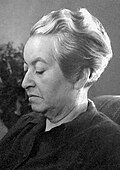
 Chile
Chile
Explanation
Gabriela Mistral was a poet born in the Chilean mountains who wrote gentle verses about children, nature, and love. Her poems treasure everyday things such as flowers blooming in the morning or the sound of wind by the sea. When you read them, they can warm your heart and sometimes make you feel a little sad. Mistral once worked as a schoolteacher and constantly thought about children who could not attend classes. That is why her poetry carries a strong wish to protect and comfort the young. These feelings spread around the world and let many people sense the dreams and hopes of Latin America.
Related Keywords
lyric poetry
Lyric poetry is a form of verse that expresses a poet’s personal feelings and interior experiences through rhythm and language. Gabriela Mistral employed this form to explore motherhood, love, and nature in depth. Her lyricism favours sensory images over abstruse metaphors, making the poems immediately evocative. She crafts sound patterns so that reading aloud conveys a musical heartbeat. Consequently, readers can readily relive the poet’s emotions and experience heightened empathy.
Latin American literature
Latin American literature refers to the body of writing produced in Spanish- and Portuguese-speaking regions of the Americas. Shaped by conquest and colonial histories, it carries multicultural perspectives and a spirit of resistance. Mistral was one of the few women to gain global recognition during its early phase. Her achievement signposted a pathway for regional writing to enter world literature. It also provided a vital precedent for later movements such as Magical Realism and post-Boom authors.
education reform
Mistral was not only a poet but also a passionate educator. She travelled among rural Chilean schools, promoting literacy. Stressing the importance of girls’ education, she advocated writing textbooks in accessible language. As a League of Nations education delegate, she called for better rural school facilities and improved teacher-training curricula. Her work left a long-term imprint on public education systems across Latin America.
maternal imagery
Maternality recurs throughout Mistral’s verse. It embodies both her personal longing—she had no biological children—and her social compassion. The maternal image is extended as a broad metaphor embracing nation and earth, awakening comfort and ethical responsibility in readers. In ‘Ternura,’ she concretised the motherly voice by weaving lullaby rhythms into her poems. Such maternal representation remains a focal subject in feminist literary criticism.
Pan-Americanism
Pan-Americanism is a vision aiming for cooperation and solidarity among the nations of the Americas. Mistral supported the idea culturally, arguing in poems and lectures for mutual understanding. She insisted that linguistic and cultural diversity held greater value than enforced uniformity. Her diplomatic experience provided a platform to articulate this stance on the world stage. The perspective is now being re-examined as a precursor to contemporary multicultural discourse.
Nobel Prize in Literature
The Nobel Prize in Literature is among the world’s most prestigious literary awards and is presented annually to a single author. Mistral became the first Latin-American woman to receive it. Her victory elevated the global status of Spanish-language literature and drew attention to women writers. Part of the prize money was allocated to her educational projects, reinforcing her social engagement. In her acceptance speech she declared a commitment to building peace and understanding through poetry.
Spanish language
Spanish is a global language spoken by more than half a billion people and serves as a key conduit for Latin-American culture. Mistral masterfully exploited its phonetic rhythms to enhance the musicality of her verse. She incorporated local dialects and rural terms, affirming the language’s diversity. This technique exemplified how standard language and dialects can coexist creatively. Linguists study her work to analyse the interplay between Spanish intonation and emotional expression.
rural Chile
Mistral’s birthplace was a small village at the foothills of the Andes, surrounded by arid valleys and orchards. Her poems repeatedly evoke the mountains’ silence and the scent of wind in the ravines. The communal spirit of rural life shaped her ethics of solidarity and mutual aid. The theme of living in harmony with nature offers a universality that resonates with contemporary eco-literature. She is also credited with introducing Chilean regional culture to the world.