1947 Nobel Prize in Literature
Reason for Award
for his comprehensive and artistically significant writings, in which human problems and conditions have been presented with a fearless love of truth and keen psychological insight
Laureates
 France
Explanation
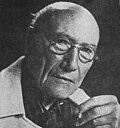
Andre Gide was a French writer who turned people’s worries and wish for freedom into easy-to-understand stories. His books teach us the importance of staying honest to our real feelings instead of telling lies. They talk about things everyone knows, like friendship, family, and the difficulty of living freely. Even when the idea is serious, Gide shows it through familiar scenes such as nature or travel, so readers can imagine themselves in the story. Because these brave yet warm works touched readers around the world, Gide received the Nobel Prize in Literature.
Related Keywords
The Immoralist
The Immoralist, published in 1902, marks a turning point in Gide’s early career and follows the ascetic youth Michel who experiences sensual liberation in North Africa after recovering from tuberculosis. Told through letters, the novel deliberately destabilizes the narrator’s reliability. After caring for his dying wife, Michel’s encounter with adolescent boys transforms his values and he chooses the life society calls 'immoral.' The book explores the clash between Christian morality and sensual pleasure and mirrors Gide’s own inner conflict. It is frequently cited as an embodiment of the 'fearless love of truth' and keen psychological insight praised by the Nobel committee.
The Counterfeiters
The Counterfeiters (1925) is Gide’s most ambitious novel and an experimental work employing bold metafictional techniques. A character within the narrative tries to write a book titled 'The Counterfeiters,' blurring the boundary between fiction and reality. A currency-forgery plot runs parallel to the coming-of-age of several youths, deconstructing the binary of authenticity and falseness. Multiple perspectives and overlapping timelines compel readers to become aware of narrative construction itself. The novel is recognized in narratology as a forerunner of post-modern fiction.
Diary literature
Gide kept a monumental diary throughout his life, which is valued on a par with his literary works. The journal candidly records his private life and creative process, detailing struggles with homosexuality, political shifts, and real-time reflections on ongoing writing. These texts serve as prime material for genetic criticism, providing clues to the relation between text and reality. They expand the possibilities of the diary genre and are considered a pinnacle of 'écriture intime' in French literature. Scholars constantly cite them as primary sources in queer studies and intellectual history.
Individualism
The core concept running through Gide’s literature is individualism, a continuous search for a subject liberated from social norms and religious constraints. His characters test the balance between personal desire and ethics while resisting external authority. Gide himself challenged the marriage institution and colonialism, asserting the right of individuals to judge autonomously. This stance influenced later existentialist and humanist currents of the 20th century. The Nobel Committee’s praise of his 'fearless love of truth' is rooted in this individualistic attitude.
Colonial critique
Gide’s 1920s journeys to French Congo and Chad resulted in the travelogues 'Voyage au Congo' and 'Retour du Tchad.' These works exposed forced labor and economic exploitation practiced by colonial administration through concrete case studies. At a time when many in France supported colonial policy, Gide’s critique caused a sensation. Later post-colonial theorists praise his respectful depiction of local environments and inhabitants. By whistle-blowing colonial injustice from within the metropole, Gide’s social impact extended well beyond literature.