1967 Nobel Prize in Literature
Reason for Award
for his vivid literary achievement, deep-rooted in the national traits and traditions of Indian peoples of Latin America
Laureates
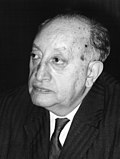
 Guatemala
Explanation
Mr. Asturias put Guatemala’s old stories and festivals into his books. He wrote down the Maya legends his grandparents told him and made them come alive on the page. When you read his stories you can almost see the forests, volcanoes, and colorful weavings. He also shows how ordinary people feel happiness and hardship. Thanks to him, we can enjoy learning about a far-away culture and its people.
Related Keywords
magic realism
A narrative strategy that blends mythic or supernatural elements with everyday reality, rendering the extraordinary ordinary. Asturias, drawing on indigenous cosmology, helped shape an early form of this technique. In his fiction gods and spirits intervene seamlessly in daily life, forcing readers to question the boundary between real and unreal. Simultaneously, social oppression and political conflict are allegorized, enabling incisive critique. The style profoundly influenced later writers such as Gabriel García Márquez and Isabel Allende.
Maya mythology
The corpus of creation and hero myths from the Maya civilization of Central America. Narratives recorded in the Popol Vuh, including deities and the afterlife, form a structural and imagistic core in Asturias’s work. Motifs such as Hun Hunahpu, the maize god, and the Hero Twins parallel character destinies and natural imagery. This infusion moves the narrative beyond a single historical moment, imparting a cyclical sense of time. By incorporating Maya mythology, Asturias both rehabilitated indigenous culture and enabled multilayered readings of his texts.
banana republic
A term describing Central-American states whose economies depend on a single export crop, such as bananas, and are dominated by foreign capital. Asturias’s “Banana Trilogy” portrays the poverty and dictatorships produced by this structure. A company resembling United Fruit appears, with coups and corruption unfolding around it. By depicting the exploitation of workers and farmers, the novels mount a critique of an imperial economic model. The concept is cited in political economy, illustrating a fruitful link between literature and social science.
indigenous culture
The totality of lifestyles, languages, and rituals rooted in a land and transmitted across generations. Asturias inserts K’iche’ rhythms and idioms into Spanish prose, rendering indigenous voices visible. Literature thus becomes a space to renegotiate center-periphery power relations. Readers experience indigenous epistemologies and views of nature, prompting reflection on ruptures caused by modernization. Re-valuing indigenous culture also intersects with debates on sustainability and multicultural coexistence.
Latin American Boom
A surge of internationally acclaimed Latin American writers during the 1960s-70s. They shared experimental structures and political themes, elevating Spanish-language literature on the world stage. Asturias, as a predecessor, combined mythic technique with social critique, offering theoretical and stylistic resources to Boom authors. His Nobel Prize accelerated global recognition of Latin American literature and spurred translation investment by publishers. Consequently, regional writing gained a stable platform within world literature.
political allegory
A narrative method that replaces concrete regimes or events with symbols and metaphors, enabling critique while evading censorship. The dictator in El Señor Presidente amalgamates several Guatemalan rulers, illustrating universal corruptions of power. Allegory invites multiple readings and serves academic analyses of power and representation. Asturias employs folktale characters and animals as symbolic devices, embedding messages of resistance. This demonstrates that literature can remain a tool of social criticism even under censorship.