1975 Nobel Prize in Literature
Reason for Award
for his distinctive poetry which, with great artistic sensitivity, has interpreted human values under the sign of an outlook on life with no illusions
Laureates
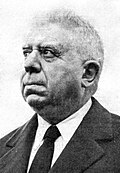
 Italy
Italy
Explanation
Eugenio Montale was an Italian poet who turned seashells, pebbles and waves into poems about life. His poems talk not only about happy moments but also about sadness and worries in a gentle way. It is like painting with words: you can almost hear the sea and smell the wind when you read them. He helps us look closely at everyday feelings like joy and loneliness. Reading his poetry calms the mind and makes us think about our own emotions.
Related Keywords
Hermetism
A 1930s Italian poetic current characterized by dense, cryptic language. Montale stands as a leading figure, using omission and implication to leave interpretive space for readers.
Ossi di seppia
Montale’s 1925 debut collection, Cuttlefish Bones, evokes a parched coastline and washed-up objects to represent lost hope and human isolation.
objective correlative
A technique of expressing emotion through a set of concrete objects or situations rather than direct statement. Originated with T. S. Eliot and employed by Montale to intensify poetic effect.
enjambment
A poetic device in which a sentence or clause runs over the end of a line. Montale used it frequently to shift the reader’s gaze and signal breaks in thought.
negative metaphysics
Montale’s philosophical stance that rejects ultimate truths and embraces the uncertainty of reality, linking impermanence with a sober view of life.
La bufera e altro
The 1956 volume The Storm and Other Things. Against the backdrop of war and totalitarianism, the ‘storm’ acts as a metaphor for psychological turmoil and historical violence.
irony
A device that conveys the opposite of the literal meaning. In Montale’s later Satura, humor and irony mingle with everyday anecdotes, heightening the poem’s self-critical dimension.