1983 Nobel Prize in Literature
Reason for Award
for his novels which, with the perspicuity of realistic narrative art and the diversity and universality of myth, illuminate the human condition in the world of today
Laureates
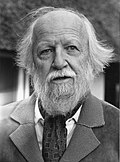
 United Kingdom of Great Britain and Northern Ireland
Explanation
William Golding was a British writer famous for stories like “Lord of the Flies.” He showed what might happen when a group of children is left alone on an island. The tale helps us see both the kindness and the scariness that can live inside every person. It is similar to noticing how friends at school can work together or sometimes fight. Because it makes readers wonder, “What would I do?”, the book is still read all over the world.
Related Keywords
Lord of the Flies
Published in 1954, Golding’s best-known novel follows boys stranded on an uninhabited island who gradually succumb to violence and fear. By borrowing the boys-adventure template, it becomes a microcosm of society and exposes the fragility of civilization. The book is taught in schools worldwide and continues to pose timeless questions.
Allegory
An allegory is a narrative that, while telling a story on the surface, embeds moral or philosophical meanings beneath. In Golding’s work, details are arranged as a network of symbols, inviting multilayered interpretation. By translating abstract ideas into concrete images, allegory carries complex themes to diverse audiences.
Human nature
Human nature refers to the innate tendencies toward good and evil that people possess. “Lord of the Flies” tackles this issue by showing how supposedly innocent children can reveal brutality under certain conditions. Golding highlights the coexistence of reason and violence, prompting readers to reflect on themselves.
Myth
Myths are age-old stories that contain archetypal worldviews and values. Golding weaves mythic motifs into his narratives to elevate them beyond specific times and cultures. This strategy transforms individual events into symbols with universal human significance.
Post-war literature
Literature written after World War II often focuses on destruction, renewal, and moral uncertainty. Golding’s novels belong to this lineage, probing deeply into doubts about human nature and critiques of civilization. The historical backdrop of nuclear anxiety intensifies the urgency of his stories.
Civilization vs. savagery
The opposition between civilization and savagery illustrates the tension between social order and instinctual drives. The miniature society of boys in “Lord of the Flies” experimentally exposes how violence emerges once the veneer of civilization is stripped away. This schema resonates with debates in political science and social psychology.
British literature
British literature spans a rich tradition from Shakespeare to contemporary authors and is closely linked to the nation’s history. By entwining social critique with religious questioning, Golding indicated a new direction for twentieth-century British writing. His influence can be seen in later authors such as Ian McEwan.