2000 Nobel Prize in Literature
Reason for Award
for an œuvre of universal validity, bitter insights and linguistic ingenuity, which has opened new paths for the Chinese novel and drama
Laureates
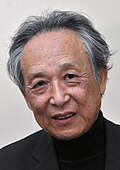
 France,
  China
China
Explanation
Gao Xingjian is a writer who creates stories and plays. Although many of his tales take place in China’s mountains and rivers, they talk about feelings everyone knows—caring for friends, searching for freedom, wondering who we are. Because he lived in a strict political time, he could not always write freely, so he walked long journeys to think and collect ideas. Those experiences became his big novel “Soul Mountain” and imaginative plays that let the audience picture things that are not shown on stage. People who read or watch his works feel as if they are on an adventure and notice how playful words can be. That is why the Nobel committee decided his stories can speak to people all over the world and gave him the prize.
Related Keywords
Soul Mountain
Gao’s magnum opus, a long novel (written 1990, English translation 1999) employing polyphonic voices and fragmentary structure to depict self-searching and contemplation of nature.
Theatre of the Absurd
A mid-20th-century dramatic movement typified by Beckett and Ionesco. Gao integrated its techniques into Chinese theatre to stage linguistic impotence and existential uncertainty.
Exile literature
Literature created by writers who live outside their homeland, depicting loss and multi-cultural viewpoints. After settling in France in 1987, Gao contributed a novel Sinophone strand to this lineage.
Pronominal narration
A narrative technique that rotates pronouns such as “I,” “you,” and “she,” destabilizing reader subjectivity and balancing immersion with critical distance.
Cultural Revolution
China’s 1966–1976 political campaign that suppressed intellectuals and cultural activity. Gao was sent to a re-education camp and burned early manuscripts, experiences later reflected in his works.
Brechtian Verfremdungseffekt
A theatrical device that intentionally blocks emotional identification to prompt critical reflection. Gao deployed it in plays like “Bus Stop” within a Chinese linguistic context.
Self-translation
The practice of an author translating their own work into another language. As a multilingual writer, Gao revises texts in French, enhancing their stratified meanings.
Chinese avant-garde theatre
A theatrical movement in China after the 1980s that departed from traditional realism to pursue experimental expression. Gao was a pioneer, with several productions banned by authorities.
Tiananmen Square incident
June 1989 suppression of China’s pro-democracy movement. Gao’s play “Fugitives,” set against this backdrop, portrays personal choice and fear, garnering international acclaim.
Ink art
A contemporary reinterpretation of traditional Chinese ink-wash painting. As a painter Gao creates abstract ink works, exploring their interaction with his literary texts.